

How Many Died From Climate Change This Week?
A Live Reckoning. Updated Every Monday.


The climate emergency is not a future problem. It is causing devastation right now. Climate communication often speaks of 2050 or 2100, and for that reason, most people file it away for a later date.
But every week, people and animals die, or are misplaced and severely affected, in frightening numbers, because of the climate, nature and pollution crisis.
This article will be updated every week, to record and educate on what the crisis is actually costing in human lives, in animal lives, and in the habitats that make all life possible.
It will also seek to report on mass displacements, as parts of the planet become uninhabitable.
17-24 May 2026
China
Torrential rain triggered widespread flooding across southern and central China from 16-19 May, with the death toll reaching at least 25 people.
Tens of thousands have been forced to flee their homes as the catastrophe spread across eight provinces.
Two national meteorological stations broke historical precipitation records, and 81 national meteorological stations set new monthly records.
The Chinese National Meteorological Center attributed the scale of the event to an unusually active early rainy season, consistent with projections for southern China under warming conditions.
India and Pakistan
An ongoing intense heatwave has brought daily maximum temperatures above 46°C in numerous cities. At least 37 heat-related deaths were reported in India, while 10 deaths were recorded in Karachi, Pakistan.
India’s Revenue Minister Ponguleti Srinivasa Reddy stated that “the intensity of the heat has reached unprecedented levels.”
Malaysia
Heavy rainfall caused floods in Johor and Kedah states, resulting in 359 people being evacuated, and extensive damage caused.
Southern California
Air quality warnings were issued on 22 May across parts of southern California, with pollution reaching ‘unhealthy’ and ‘very unhealthy’ levels around the Coachella Valley and Salton Sea region.
The American Lung Association's State of the Air 2026 report found that 44% of Americans - that’s 152 million people - live in places with failing grades for unhealthy levels of ozone or particle pollution, and nearly half of American children live in counties that received a failing grade for at least one measure of air pollution.
11-17 May 2026
In Indonesia, flooding and landslides destroyed more than 5,600 homes and displaced 24,400 people.
In Vietnam, four people were killed by lightning strikes. Across Southeast Asia, 38 separate disaster events were recorded in seven days.
Indonesia
Continuous heavy rainfall on 12-13 May triggered flooding and landslides across 11 sub-districts, 21 villages and five urban wards in Bungo. About 6,000 families - 24,400 people - were displaced or severely affected.
Around 5,600 homes were damaged or destroyed, along with four schools, two places of worship and 214 hectares of rice fields. A 14-day emergency was declared from 15 to 28 May.
Vietnam
Lightning strikes in Quang Tri, Da Nang and Quang Ngai on 13-14 May killed four people and injured one. The same period brought storms, flooding and landslides across multiple northern and central provinces, destroying crops across 420 hectares and causing infrastructure damage estimated at around USD 390,000.
Regional picture
Across the Association of Southeast Asian Nations (ASEAN) region, 38 separate disaster events were recorded during this single week - floods, landslides, storms and wind-related disasters across Indonesia, Malaysia, the Philippines, Thailand, Timor-Leste and Vietnam.
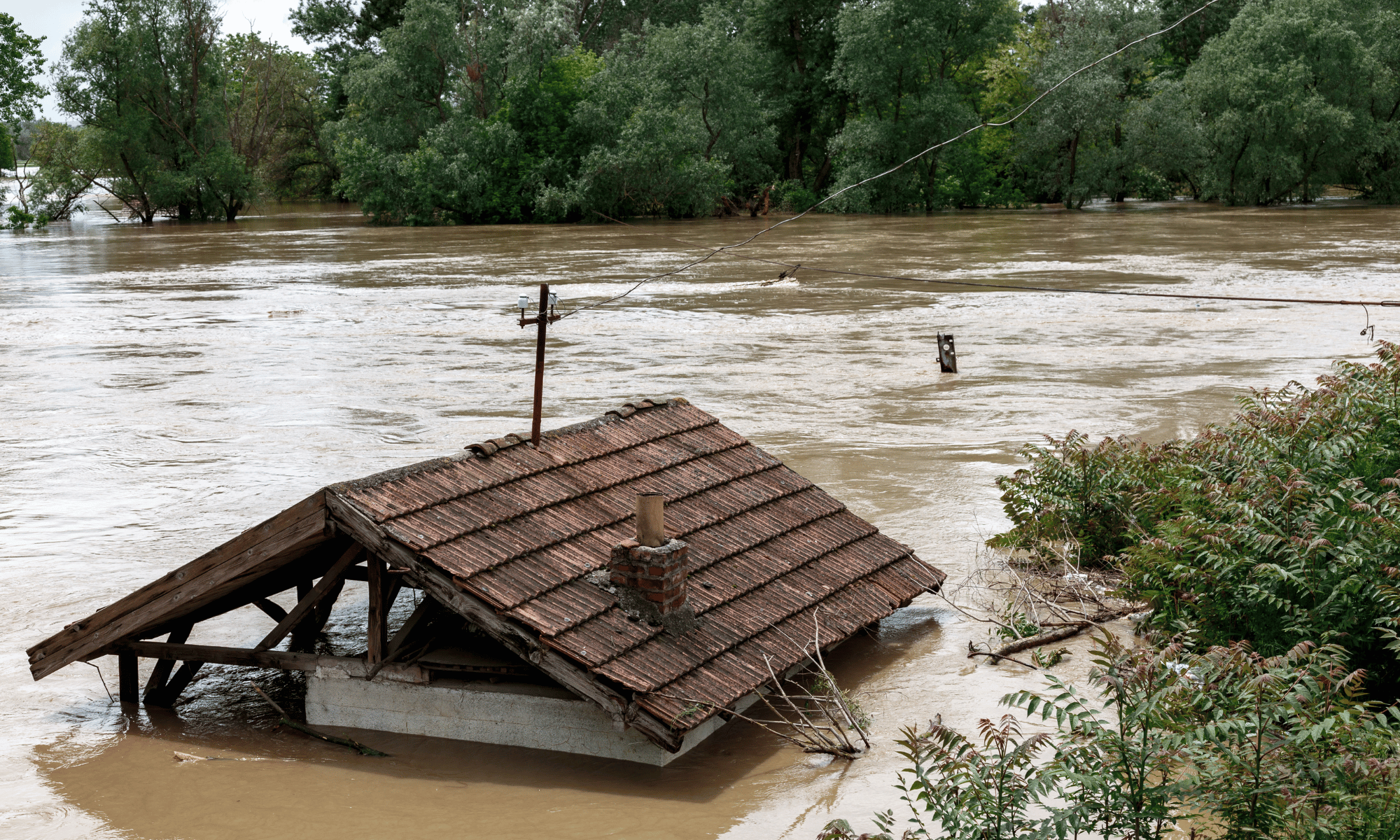
The Annual Climate Death Toll
Annual global estimates, by cause, from official sources
Air Pollution: Between 7 million and 8.1 million deaths per year. 89% of deaths occur in low- and middle-income countries.
Extreme Heat: Approximately 546,000 heat-related deaths per year globally. This is the most recent figure, from the 2025 Lancet Countdown on Health and Climate Change.
Wildfire Smoke: Estimates range from approximately 339,000 to 677,000 deaths globally each year.
Floods: Highly variable year to year. In 2023, approximately 7,600 deaths were recorded globally from floods.
Storms and Cyclones: Figures show about 11,500 deaths per year, but catastrophic single events can skew the data. In 2025 alone, Tropical Cyclone Senyar killed 1,482 people across Indonesia, Thailand and Myanmar.
Drought: Roughly 13,000 per year on average, but many drought deaths occur through famine, malnutrition and displacement and are rarely classified as drought deaths in official reporting.
Wildlife Deaths: A 73% average decline in wildlife populations has been recorded globally since 1970, based on 5,495 species of amphibians, birds, fish, mammals and reptiles. Latin America and the Caribbean have experienced a 95% decline - the most serious of any region.
About 1 million species are currently threatened with extinction, many within decades. This includes 40% of amphibian species, a third of marine mammals, and a third of reef-forming corals.
People Migration: More than 1.6 million people are uprooted from their homes every week, on average, due to conflict or environmental disaster. An average of 21.9 million displacements per year are linked to extreme weather.

How The Facts Are Gathered
Based on climate science, this document will report deaths around the world attributed to climate change, from extreme weather events and pollution emergencies - floods, heatwaves, storms, wildfires, droughts, extreme cold, and direct pollution incidents. This includes human deaths, wildlife deaths and livestock losses where figures are available.
It will also record permanent or long-term damage to habitats, such as coral bleaching, forest loss, wetland destruction, ice sheet collapse. Figures are drawn from humanitarian agency reports, peer-reviewed science, and wire services.
We cannot yet count the far larger category of slow-burn deaths - the estimated seven million people who die from air pollution annually, the deaths from climate-driven crop failure, disease and displacement.
These are tracked annually by the WHO, UNEP and others. They cannot be verified week by week, but the annual baselines will be referred to as context.
Wildlife deaths from climate and pollution events is even more severely under-reported than human mortality. Where figures exist, they will be included.
Multiple official sources are being used to gather data. However the numbers will always be lower than the reality.

Subscribe For Free
Everything published on Ethical Disruption is free, and always will be. Subscribe and you’ll read it first.
Join The Community
This is where the conversation happens, where we work through what better communication actually looks like. If you want to be part of building something, rather than watching it, that’s where to be. Simply upgrade your subscription on a monthly or annual basis.
Support With a One-Off Contribution
If a subscription doesn’t suit, but you want to support the work, then thank you, and please choose the link below.
Become an Ethical Partner
A small number of partnerships are available for those who want to support and help to steer Ethical Disruption’s mission.
Share This Article
The communication crisis is all too real. Sharing this article is, in itself, a small act of better communication. Thank you.