

Joe Rogan and the New Rules of Climate Communication
There's no business like show business to go viral with climate and nature content

It won’t have escaped your notice - and I sincerely hope that you have not been personally affected - that life appears to be at breaking point, in so many ways.
As a climate and nature communicator, I am particularly concerned about the rising frequency of extreme weather, which has killed thousands of people in recent months; also, the devastating decline of nature, and animal welfare.
There are many superlative climate and nature writers out there. An increasing amount of impressive podcasts. The occasional hard-hitting environmental TV show.
No slight on any of them, but I don’t believe the vast majority of even our ‘best’ climate and nature communication has come close to cutting through where it matters.
Hardly any of it is moving the dial. It’s informing an audience that is already informed. It’s preaching to the converted - people who choose to listen to a climate podcast, or choose to read an environmental story on Substack.
So where does it matter most?
It matters chiefly at government level. And we the people elect our governments in most countries. So the power - and blame - lies in our hands.
A president, a prime minister, a government, has the power to make overarching, meaningful changes to environmental and energy policies, that truly do make a difference to people’s lives, and to the natural world, for decades to come.
More so than anyone, or any business, or any organisation. Overwhelmingly, government policy dictates the direction of travel for our quality of life.
At present, we the people have elected some of the most irresponsible ‘leaders’ across the planet. And we the people are forecasted to elect even more damaging governments in future, in many places.
The solution, of course, is to educate the population. Something the climate and nature movement has been trying to do for many, many years. Largely without meaningful success.
I know that sounds harsh, because so much progress has genuinely been achieved. Yet, when it comes to election time, where is climate and nature on the list of priorities for voters, never mind candidates? Where does it sit within the media coverage?
It’s nowhere. Or it’s an afterthought. Pollution, in some forms, is breaking through as an issue that people care about, but that often tends to be localised.

Reaching the mass middle
At one end of the population, you have people who consume lots of content about environmental matters. They care. Many of them act upon their concerns.
At the other end, you have people whose opinions will never be swayed, perhaps through blind political loyalty, or religious beliefs, or an association with polluting industries.
The mass middle has been estimated, in US and UK surveys, to include about 60-65 per cent of the population. These are people who are open to being educated, these are the people we need to have on our side to make positive changes.
But these are the people we frequently lose.
Sometimes we talk down to them. Sometimes we inject too much fear. Sometimes we underplay the seriousness of the situation, so that everything doesn’t seem too bad after all. Often, we attack them.
I believe we need to communicate powerful messaging without people even realising we’re doing it. We have to smuggle in the message. Those on ‘the right’ have been doing it far too well for years.
We need to turn up on our target audience’s territory. We need to speak their language. We need to make issues relatable to their lives. And we need to do it using formats and methods they are familiar and comfortable with.
I’d be a very rich man if I had a pound or dollar for every time I’d heard someone say “the media won’t tell you that…” Look, the media will never tell people what you want them to say. Sadly, most of the larger titles and channels have their own agendas.
If we want to educate and influence people, we have to do it ourselves. And we have more opportunity than ever before to reach the right audiences.

Talkin ‘bout a revolution
When I talked about “communicating powerful messaging without people even realising we’re doing it”, you can look to the right of politics for the best examples.
I know too well as a journalist, frustratingly, that most people who still buy a newspaper, do not do so for the news. They buy it for the sport, for the puzzles, for the TV guide, for the births, marriages and deaths column, for the small ads.
They happen to read the news as well, and the messaging about there being too many immigrants seeps in like a sedative.
Narratives are smuggled in across social media. Much of the opposition and cynicism about climate issues, veganism and the like, comes from the over 60s, according to surveys. They live on Facebook and YouTube. That’s their territory.
But then pretty much everyone these days lives on YouTube. It’s the world’s second largest search engine, it has just introduced crucial new features for communicators - and the right became aware far earlier of its power.
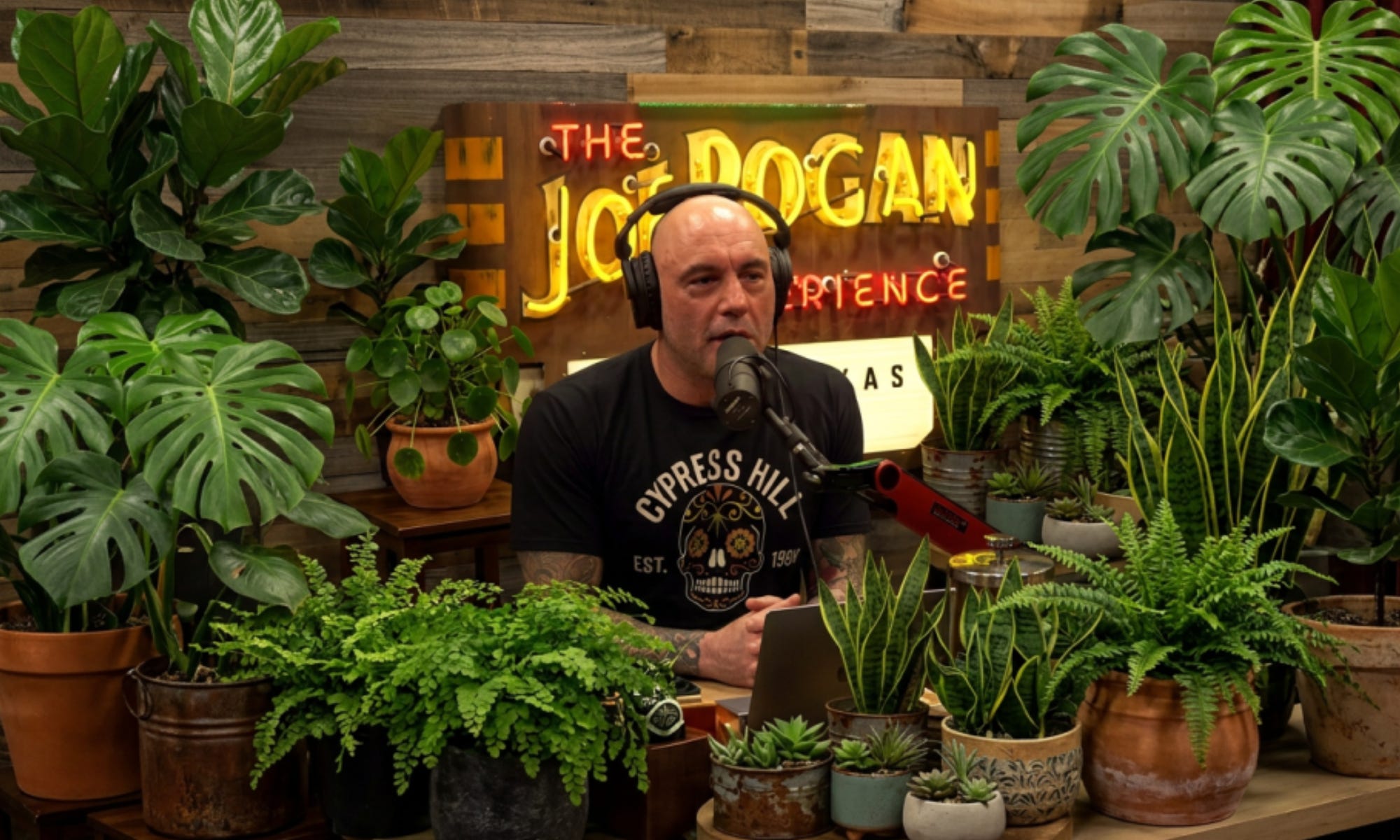
Where progressive people run channels on climate, nature and animal welfare, the right run talk shows. Multiple millions watch Joe Rogan, Tucker Carlson, Jordan Peterson, Ben Shapiro, Candace Owens, Triggernometry and more.
Novara Media and Pod Save The UK are examples of left-leaning podcasts and shows that are growing audiences, but they are nowhere near the scale of the Conservative talk show.
It’s Show Time
Social media is increasingly becoming the new Netflix. You sit on your couch and binge it on the big screen. And that gives the climate, nature, anti-war, empathetic, animal-loving movements a lot of opportunities.
YouTube, Substack, Instagram, Facebook, TikTok, Snapchat, Pinterest and X are all launching or testing features that turn short or scattered content into structured, bingeable “TV-like” collections.
YouTube calls it Shows. With good reason. The data shows that social video is now the second-most-watched video type on big screen TV - and is rising fast.
YouTube already captures more TV viewing time than Disney and other major streamers. Crucially, one hour of social video makes roughly three times more ad revenue than an hour of linear TV or streaming.
Platforms are trying to move from isolated phone scrolling to shared, lean-back viewing. Legacy media can only compete with major live events - and even now, much sport is also being shown on smaller YouTube channels.
Why does this matter to climate and nature communicators?
YouTube’s new Shows feature is an opportunity for progressive creators to compete more effectively with the right’s dominance.
At present, right-leaning online shows command roughly five times the audience of left-leaning shows across YouTube and other platforms
As I’ve already pointed out, right media also dominates in niches such as sports and lifestyle, where ideology is smuggled in under the premise of it being “just entertainment”.
Many of the biggest right-wing programmes I’ve previously mentioned are structured as daily or weekly shows, with recurring formats.
Progressive creators have often been stronger at single videos and explainers, but weaker at long-running, branded series that people can settle into like a routine.
YouTube Shows is designed precisely for that.
I’m aware I’m talking ‘left’ and ‘right’ here - that’s simply because climate issues, and often nature issues, do tend to separate down these political boundaries.
The right’s shows thrive because people watch them repeatedly, often in sequence.
So it’s over to progressives to start making TV content, because YouTube autoplays episodes in order if you have a showlist.
Journalists can also present their work as a series, rather than a stream of articles.
Niche topics, such as the environment (yes, it’s seen as niche), will increasingly be served by creator-led channels or shows that feel like their own mini-networks.

So what do we do?
We don’t necessarily need a left-leaning, nature-loving, vegan version of Joe Rogan hosting a show. I mean, it would be helpful, and there are a number of YouTuber scientists slowly making their mark, but even faceless explainer channels can be successful as shows.
If we want to get into people’s homes and be part of their everyday conversations (yes, we do), then the chance to produce bingeable shows, on whatever platform, are a promising development that should quickly be explored.
I’m already doing it - and you can help
Ethical Disruption is where I’ll show the receipts of my own efforts to improve effective climate and nature communication.
But there is no funding for the climate and nature journalism and content creation that connects with the mass middle of the population.
It is not a job, as such. There is no obvious employer. There are no easy, ethical ways to monetise it.
There is funding available for investigations. For scientific studies. Rightly so. They are vitally important in the landscape of communication.
But I have taken a different path, where language is simpler, because the aim is to connect with more people. Where scientific terms are translated into plain talk, where data isn’t quoted if it confuses.
I have written Substack articles and media articles across many countries, for many years. Now I’m focusing a lot of my content on audiences that need to hear it, if we want to see meaningful change.
I rely on the goodwill of readers like yourself to keep my mission going, and I thank everyone dearly, who has helped me on my journey so far.
If any of this resonates with you today, and if you are in the fortunate position to help support my efforts to move the needle on meaningful action, then I would be extremely grateful if you could help to fund my work. Thank you.
To subscribe on an annual or monthly basis, or as a supporting partner, please go here with my thanks:
If you wish to make a one-off contribution, I also thank you very much. Please go here:
Now, everybody - on with the show!