

How to Pitch Your Writing to the Media
The vital details only a journalist can tell you


Have you ever thought about writing for the media? For newspapers or magazines?
Don’t think that you have to be an experienced journalist to do this. There have been thousands of redundancies in the media over recent years, largely due to the impact of the internet, and many section editors are now grateful for submissions - from anyone who knows their subject, and can write about it in a way that doesn’t require too much editing on their part.
And you’ll get paid for it - sometimes paid well.
Only a journalist knows what goes on behind the scenes, which is why I’m giving you this insider information to get ahead of everyone else pitching articles…
What Can You Write?
You can pitch an idea to a journalist, but if they don’t know you and your writing already, you are unlikely to be encouraged.
However, you can pitch a completed article - a story or feature - and if it’s judged as being interesting for the publication’s audience, and well-written, then you might even have found yourself a regular gig.
As magazine and newspaper staffs are small these days, the use of freelancers is common.
Specialisms are particularly valued. Once upon a time, a media publication would employ vast numbers of them. I have been environment reporter, music and entertainment editor, council reporter…
The cause closest to your heart might fit into a category that the publication values.
News or Features?
Will you write a news story or a feature?
Don’t think of ‘breaking news’, crime and politics - unless you want to go there.
A news story can simply announce someone as the winner of a community sustainability award, or reveal the line-up of a local festival.
A news story is the announcement of something that has not been reported before, especially in that publication.
A feature is a longer article, a deeper dive, a story-behind-the-story, a profile on a person, a day in the life of a charity, an interview with someone interesting and relevant.
Remember - you can always ask me for advice on any article you have in mind, and in which camp it sits.
Keep It Simple, Unless Complexity Is Valued
To effectively communicate your message, you must usually write in plain language and simple terms. No jargon - unless you are writing for a specialist media outlet which understands the complexities of technical terms you might want to use.
What you are trying to do is this:
Make the journalist understand what your story is about and why it is newsworthy. A journalist-first approach will bring you more success.
Make it easy for the journalist to pass on that story to the audience.
Make it easy for the audience to understand what the story is about, why it is important, and to make a meaningful connection with them.
What Makes a ‘Green’ Story Newsworthy?
There are many different types of media outlets. National newspapers, local newspapers, trade publications, online news sites, radio stations, television networks and podcasts all have different priorities - and all have multiple methods of communicating your messages.
While national newspapers focus on major events and trends, local publications are always on the lookout for community-focused stories. Anything that chimes with the audience in their catchment area will be considered.
Although journalists now rely on a healthy flow of pitches and media releases, there are hundreds each day flooding into their inboxes. So yours has to grab their attention, and most importantly, it has to be newsworthy.
What you may consider newsworthy, may not be the same in the eyes of a journalist.
Remember these main points:
Your story must be interesting to the media outlet’s audience
It cannot be a blatant free advert that carries no news value
There are key factors in determining newsworthiness:
Timing
You’ve got to put the ‘new’ into ‘newsworthy.’ Old information is not going to open doors for you. So if you’ve already shared your news on social media, or given it to a rival media network, don’t be surprised if your story is turned down.
Journalists prioritise fresh stories, so your announcement, whatever it is, must be current and relevant.
Is the subject topical? It’s not absolutely necessary, but if you can tie in with something currently in the news, or something recently the subject of debate, or if you can relate your story to a forthcoming event or date, you will have a greater chance of getting your article in print, online and shared across social media.
It can be a National Awareness Day (there are so many of these now), it can be an event like a vegan food festival or a nature conference, it even be regular dates like Christmas or Mothers’ Day.
Remember that timing is also crucial when it comes to submitting the story, though - don’t miss the deadline to tie in with the appropriate event.
Relevance
When your article lands in front of the journalist’s eyes, they will also be thinking ‘how many of our readers will be interested in this?’
A story must appeal to the audience of the publication or media outlet you’re targeting. What’s newsworthy for a local newspaper may not be relevant for a national business magazine. Research your target media and tailor your story accordingly.
It’s also worth bearing in mind that the issue of relevance can change, according to who you send your media release to.
If you run a restaurant and you’re launching a new menu for vegans, that’s not likely to be enough to persuade a news editor to run a story. It just sounds like an advert.
But if you’re targeting a food magazine, or even the food and drink reporter of your local paper, you’ve got more of a chance.
Human Interest
This can be the most important aspect of an article, because most stories relate to people. Even if it’s a new building, the interest in that will surround the people who are going to be living or working in it, or in the shadow of it, or the number of people employed in constructing it, or the person who designed it.
Journalists love stories that evoke emotions - whether they inspire, educate, or provoke thought.
Maybe your article is all about a person - a new appointment, an award-winner, someone who has gone the extra mile to help the community, or help save animals or habitats.
In this case you have got the human interest angle already. Just make sure you give as much detail about them as you can - don’t leave any questions unanswered.
Perhaps, though, you’re involved in the launch of a new product or a new service. If this is the case, emphasise how people will benefit from this. Why should it matter to them?
Proximity
Where a publication has a clear, dedicated circulation area, as a local newspaper does, the word ‘local’ is first and foremost in the journalist’s mind.
If you are giving them information which relates to a place outside their circulation area, your email will almost certainly be deleted. (Your pitch should always be sent by email!)
Uniqueness
If you or your subject matter is doing something groundbreaking, or has perhaps achieved an impressive milestone, or is solving a unique problem, this increases its media appeal.
Controversy
Don’t shy away from the fact that your piece of news might lead to a debate. Controversy or conflict can make a story newsworthy.
Prominence
If your story contains information about a celebrity, well known person or well-known place, that will certainly grab the attention of the journalist.
To determine if your story is truly newsworthy, ask yourself: Would I read this in a magazine or newspaper? Would it interest someone outside of my company? If the answer is no, consider adjusting your angle.
Let’s Cover The Essentials
Answer the 6 W questions
This is at the heart of every story you will write for the media. All it requires is to give the basic details of the story, making sure every elementary question a journalist would ask is already answered for them.
So this is the 6 Ws. This is pretty much the first thing a journalist learns. Many coaches will tell you it is the 5 Ws, but that would involve leaving out some crucial information.
I’m actually cheating by calling it the 6 Ws because it’s strictly 5 Ws and a H that ends in a W, but never mind that!
Just remember you have to do exactly the same as every journalist does in writing every article - answer these questions:
WHO?
WHAT?
WHERE?
WHEN?
WHY?
HOW?
Bear these in mind when you are writing your media release, and go through the list again when you have finished.
Make sure all six questions are answered, otherwise that means the journalist will be left without the whole story - and they may simply decide to ignore it, rather than check with you for further information.
Remember - make the journalist’s job easy for them!
Essential Information
Write in the Third Person - It’s “Wendy’s Electric Wagons has signed a lucrative new distribution deal...”
Don’t Jazz It Up - This isn’t a design exercise. Keep the type black, no fancy colours and definitely no fancy fonts to grab the attention of journalists.
Short and Sweet - Keep your paragraphs as short and snappy as you can, and leave a line space in between each paragraph for easy reading.
Check your spelling, punctuation and grammar - If a story comes in that is littered with spelling and grammatical errors, it won’t have much chance of being considered. Why? Because journalists don’t want to spend time correcting all your mistakes! If they can copy and paste your words, and simply tweak things, many journalists will be happy with that.
Always use a spell checker - but this won’t recognise any mistakes you’ve made with names or addresses, of course. Read through your story or feature several times, checking every fact, name and spelling. Most word processing software will highlight spelling, punctuation and grammatical errors as you go along.
Check the style - This is far less important than it once was, but all media, especially print media, has its own ‘style book’. This is a set of rules for such things as when to include capital letters, which abbreviations to use and which words to avoid.
There’s no way you can know what’s in this style book, and these days they are a loose set of rules, but I would always advise to research the publications you are targeting to get a feel of the language and tone they use.
There are some rules I have always followed, such as numbers being spelled out from zero to nine, and written in figures from 10 upwards. And try not to use old fashioned language like ‘whilst’ and ‘amongst’, when you can use ‘while’ and ‘among’.
Scan the publications you are targeting - it will be quicker online - to see if you can get a feel for their treatment of the kind of topics you are writing about.
How To Structure A News Story

The first thing to write on your story is the headline, right?
Wrong! No journalist writes the headline first.
Maybe you’ve got an awesome headline in mind and you know exactly what you want to write, to try to grab a journalist’s attention.
If so, write it down and you might want to change it later.
Your headline sums up the article and sells it. But until you’ve written the article, you won’t be able to sum it up, and you won’t know the best selling points.
Your headline also has to make an immediate impact. If it doesn’t grab the journalist’s attention, your email might be deleted without even being read.
One very important thing here - don’t try to be clever. Leave the actual published headline to the journalists, don’t try to use puns or be ambiguous. No clever play on words or smug alliteration.
You have to sell your story in the media release headline, simple as that. Just tell it as it is.
‘Newtown vegan cafe funds 100 bat boxes for local woods’ has a far better chance of success than ‘Cafe goes batty for nature’.
The headline shouldn’t be too short or too long, but must sum up what the media release is about, taking into account those factors mentioned in our other articles, like human interest and the 6 Ws.
Remember: You don’t want your story to appear like an advert. If that’s the impression given, it won’t be given the time of day.
So instead of a headline saying...
‘J Clark & Sons helps community project’ try ‘Community project boosted by local firm’.
The exceptions to this rule are where the company is well known, so it has become newsworthy whatever that company does.

Write the Introduction
If you are writing a news story, then you are submitting a Media Release.
You are going to write up to three summarising bullet points between the headline and the story - but you probably can’t write those yet.
As with the headline, you have to work your way through the story first, then determine which are the most important points to highlight.
When you do include them, make sure they are brief, and no more than one line each.
The intention is to get all the most important points across to the journalist in the space of the first few seconds of them looking at it.
So let’s move on to the intro - the introduction - the opening paragraph.
This is an exercise in summing things up neatly and succinctly, while making it so good, people will want to read on - first the journalist, then the article reader.
You must give a summary of the main thrust of your media release, preferably in 15-20 words, while answering as many of the 6 Ws as you can.
Here’s a reminder of those:
Who is making the announcement or who is featured in the story?
What is happening?
When is it taking place?
Where is it happening?
Why is it important? Why should people care?
How does it make an impact?
It is quite a skill to sell the story in such a short wordspan, but that’s the guideline journalists get for their own stories, and they’ll expect the same from you.
If you’re really struggling, you can stretch to 30 words, but no more!
It’s simply another version of the ‘hook’ that everyone on social media is obsessed with. It’s true, though - first impressions count.
Now The News In Detail...
After you’ve written the intro, explain your story in short, easy-to-follow paragraphs.
When you do your research into the titles you are targeting, if you notice that they are open to longer sentences, by all means add extra words if it helps you to get your point across or add more detail.
Media releases should follow what many call the ‘inverted pyramid’ structure, meaning the most important information comes first, followed by supporting details.
Don’t bury the best part of the story at the bottom, don’t work up to it like a ‘reveal’ at the end. Media releases work in the opposite way.
Be careful not to make it boring or confusing. Retain an easy flow - read it back time and time again, and if you stumble anywhere, change the wording.
Make it easy to read and easy to follow. Use bullet points or sub headings if it helps to explain or break down the details.
Answer your 6 Ws and remember that local newspapers in particular can be very strict about requiring full names of all people in the story (correctly spelt of course), and where relevant, the ages and addresses (street name, town) of the people you mention. Readers like to know this kind of information.
Provide more background and details that add depth to your announcement. Expand on the benefits and features, provide statistics, data, or facts that support the news. Offer context if relevant.
Imagine your media release is on A4 / US letter size paper - try not to write on more than one side. So that’s roughly 300-400 words, including a paragraph or two of quotes.
The Value of Trusted, Strong, Meaningful Quotes
Include in the main body of your media release a paragraph or two of quotes from somebody most relevant to the story. Maybe it’s yourself, maybe it’s a company CEO or a speaker at an event. Somebody trusted, someone with genuine authority.
Quotes offer an extra human element and give your story extra weight because an expert is supporting, with authority, the words you have written.
Not only that, if you submit a photo of the person quoted, there’s a good chance it will be used, helping you to achieve more free coverage due to it being more prominent on the page.
What should the quotes say?
This is really important. I’ve seen so many media releases that have included absolutely pointless quotes.
The quotes have to say something meaningful, and don’t waste the space - they should add something to the story that hasn’t already been said.
If the quote amounts to repetition, it is not going to be used.
Avoid bland quotes; instead use them to highlight vision, impact, or expertise.
And keep it authentic - don’t make it sound like the quote has been scripted. Ask yourself, does anyone actually talk like that?

Be Helpful To The Journalist… Then Send Your Article
When writing and presenting and sending your media release, always have this in mind - are you making it easy for the journalist? If you do, you’ll have a far greater chance of achieving success.
From the little details to the bigger picture, give the journalists exactly what they need.
For the last paragraph of your media release, it is worth inserting a Call To Action (CTA) - an instruction to readers which may or may not be retained by journalists.
Something like ‘Book your place at the Electric Vehicle Show’, followed by your website address.
Then, at the conclusion, underneath the final paragraph, type ENDS.
That’s what has always confirmed the end of an article to journalists, letting them know there is no more hidden on another page.

Beneath this, write ‘For more information’ and add your contact details, and if you need to, the contact details of anyone mentioned in the story, in case the publication needs to check anything.
Make sure you give phone numbers, email addresses, even social media accounts.
You want to put the message across that you, and/or the person or people quoted in your story, are ready, willing and able to help the journalist and give them more information immediately, if required.
Next comes a section often labelled ‘Notes To Editors’.
If you wish, you can call this Extra Information, Background Information, Helpful Notes, Further Details etc.These are short notes which give the story some background, context or explanation.
It looks better when you present them as bullet points.
This information is sometimes used by the journalist in the published story, but is more often used to help the journalist fully understand things.
After all, they might not be very familiar with the subject matter you have written about.
Within these notes, you can give information about your business.
The nuts and bolts, what it does, why it does it etc.
Feel free to mention if you’ve won any awards, repeat any recent news that may have been published, for example, a huge expansion or the opening of a new headquarters.
All these things give the journalist some background and context, and you may be lucky enough to get some of the information mentioned.
Especially if they need to pad out the article to fill a hole of another 200 words or so!
Mentioning too many business details in the media release would have turned the journalist off, but you can get away with them in the notes, as long as you keep your bullet points brief.
Final Touches
Make sure you have put the date at the top.
If your location is important - for example, if it is a local story - you can write that as well.
Let the journalist know when this story can run.
If straight away, type FOR IMMEDIATE RELEASE.
Presenting the Media Release
I would urge you to paste the story into the body of the email, below your initial message.
I would do this because the busy journalist has to take one more step to open an attached document, and what if the file does not open on their computer?
Paste it in the email and they can see the story immediately, and cut and paste the words to their own document.
Attaching Photos
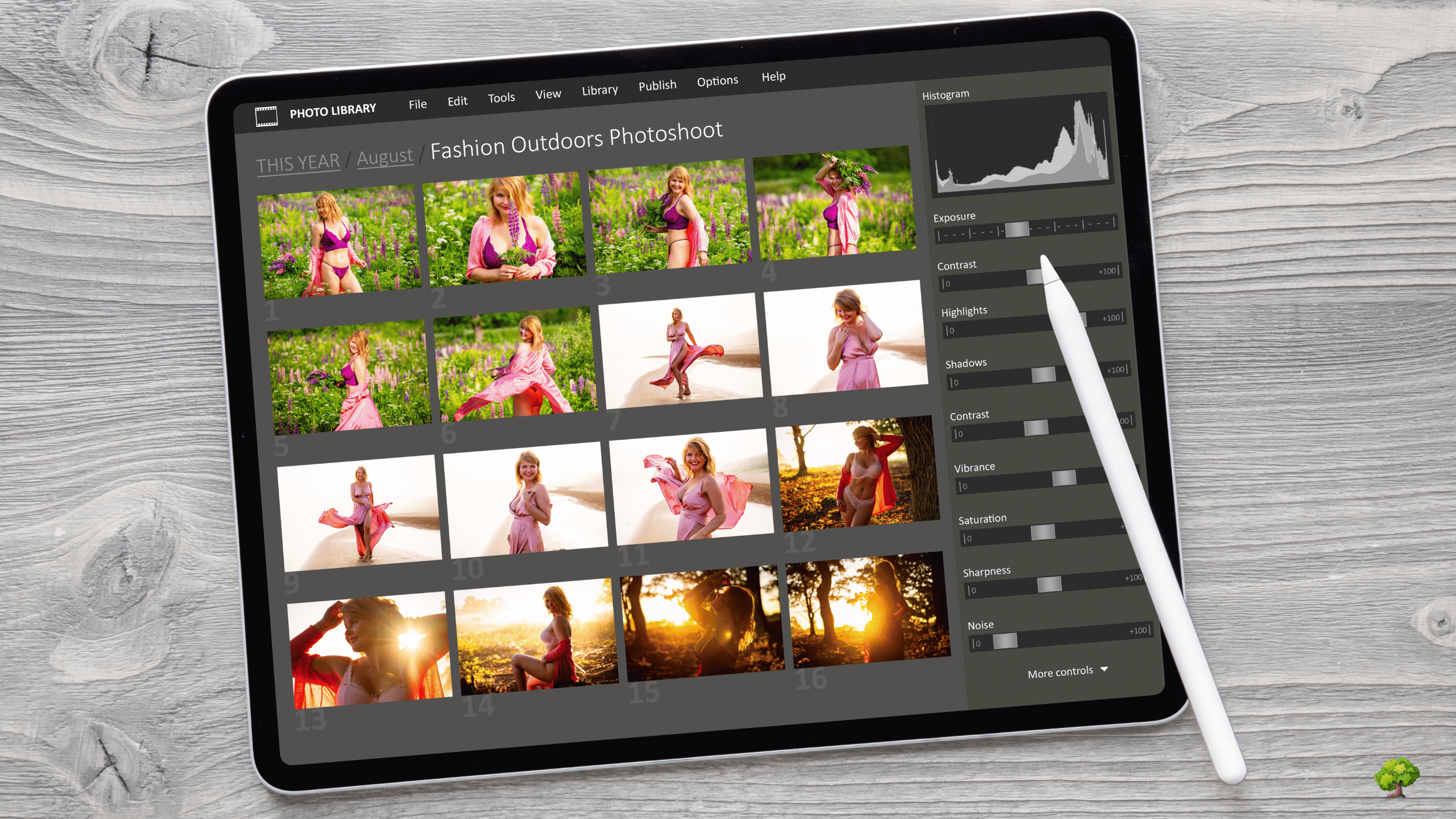
It is very important to attach between one and three good quality photos for a news story, and up to 10 high quality photos for a feature.
Without a photo, the story is going to be shorter when it is published on a website, or printed in a newspaper of magazine.
One decent photo could elevate it into a lead story.
One decent photo would help it to be shared across social media.
Now, there are important things to get right here.
Make sure the photo is sharp and clear.
Make sure it is framed well - save the journalist time, and give yourself a better chance of the photo being used, if it is cropped around the subject matter.
Do not include any advertising in the photo unless the story absolutely demands it. Often, if a submitted photo has a company’s logo in there anywhere, it may not be used - that’s seen as watering down the news value of the story, with free advertising.
Make sure the images are eye-catching, interesting and relevant.
Don’t attach anything that is too large - the email might not even be received. Don’t send anything too small - it won’t reproduce well. Use software, if required, to compress the size of your images without losing too much quality. You can, of course, explain to the journalist that higher resolution photos are available if they need them.
Can You Include A Video?
Do you have a video to complement your story? If you do, it could be dynamite. As long as it is short, to the point and attention-grabbing within the first five seconds.
If you do have a video, don’t include the whole file on the email, just include a link at the end of your story, in your call to action section. You’ll probably have it on YouTube.
It’s unlikely to be copied in print, but on the newspaper’s website and social media channels it could be included as a link, or even embedded into the story.
If you’re putting on an event and have a well known guest singer appearing, for example, media websites will almost certainly run a video from YouTube and the like, so that readers can click on and hear a song - and you will have provided the direct link, of course.

Crafting The Perfect Pitch To Journalists
Once your story or feature is written, the next step is getting it in front of the right journalists. Those who can really help you. Those who might empathise with your mission. Trusted journalists on trusted publications.
A well-crafted pitch (that’s effectively just an email message) can mean the difference between your story getting published or being ignored.
Journalists receive dozens - sometimes hundreds - of pitches daily, so you need to ensure yours stands out.
Please avoid sending generic, mass emails. Instead, research the journalist and their publication. This is easily done on the internet - find the publication, find a journalist who has written about your subject, and see if you can get their email address from that story - it is usually shared at the end, or by clicking on the journalist’s name.
This will allow you to write an email, introduce yourself briefly and reference a recent article they wrote, explaining why your own story is also relevant to their audience.
As well as the individual journalist(s), address the email to the newsdesk or news editor as well - you will find this information on the publication’s website.

Writing the Email - and Making Sure It Will Be Opened
Reporters and section editors will try their best to go through everything in their inboxes, but sometimes they really are so busy that they are just going to scan the email subject lines to see what interests them - that’s their filter and you’ve got to get through it.
I see an ever-increasing use of emojis in subject headlines these days.
While these undoubtedly make your email stand out, there is something about them that journalists won’t trust. Perhaps because so much spam comes littered with emojis, too.
Your email subject line is perhaps the most important part of your whole pitch.
Personally, I’m not in favour of wasting a valuable email subject line word count by starting with ‘Media Release’ or ‘Story For You.’
Because it stands to reason, you’re contacting the media, it’s likely to be some form of story pitch or announcement.
Instead, focus on selling your article. And making it sound like an email they really, really need to open.
I find it’s often the best tactic to use phrases that journalists themselves would use.
So perhaps start your email subject line with ‘Urgent’ or ‘Latest News’ (as long as it really is).
Or relate it to the subject matter:
‘Newtown Windfarm Expansion’
‘Wildlife Sanctuary Owner Speaks Out’
Maybe use the headline you’ve written on your media release, if it’s a really good one. Shorten it further, if it needs to be.
Or if you’re offering the story as an exclusive, by all means start the email subject line with:
(PUBLICATION NAME) EXCLUSIVE: (Main angle of the story)
Whatever in your story is the most interesting angle, the biggest selling point, use it in your email subject line.
Don’t try to be clever or witty, don’t make puns or plays on words.
Just tell it as it is.
A journalist needs to assess quickly if any of the emails in their inbox might help them fill a few holes in the next publication.
So tell them straight. And impress them.
Be Courteous and To The Point
Start your email by introducing yourself to the journalist and explaining what your article is about - and make it as brief as possible.
Write a friendly, courteous introduction, explaining from the top that you have an article you believe their readers will be very interested in.
Give a line or two explaining what it is and offer to assist with any further details they may need. As simple as that.
So it may be:
Hello Catherine (you found her name online), hope you are well.
I am sending you some information about a new preloved fashion store due to open in Newtown next spring.
I have spoken to the sisters running the store, and I’m sure this is something your readers will find interesting.
If you need any information or photos other than those attached, please don’t hesitate to contact me.
Thank you for your time…
And then it’s into the media release. Leave a few lines of space and paste it in.

When To Send The Email
Timing is crucial. If you are sharing news that coincides with a particular date, be sure to give the journalist as much time as you can ahead of the event, to write up the story.
Also, think about what else is going on locally or in the wider world. Avoid pitching late on a Friday or during major news events, unless your story ties in somehow with the news - in which case this will be perfect timing.
The deadline of a printed publication is a crucial piece of information you need to know, and if you can’t glean the details you need from the publication or its website, just give them a call or email someone to find out.
Every printed publication and section of that publication has a deadline, after which there is no more time to add or change anything before it is printed.
Some deadlines are way far in advance of when you might think they are.
A magazine will usually have a three-month run-in period, with contents being agreed and then worked on or set up for the publication that far ahead.
So if you’re targeting the Christmas market, the rest of the world might think it’s too early to discuss this in August, but not if you want to pitch a feature in the festive edition.
Some magazines will have far tighter deadlines, others far looser.
Newspapers are usually daily or weekly publications, but in the world of cutbacks, many printing presses have been closed down and operations centralised, so ‘local’ newspapers might in fact be printed a long way from home.
When this happens, deadlines will be far earlier than you might think, because there needs to be time to print the papers, then load them into the vans, to drive back to your area and distribute the publications.
So don’t be caught out. And remember this, only the most important news pages are finished on deadline - you might be targeting the business page, for example, and this could be designed a whole day earlier.
Or if it is a specialist supplement being printed, it’s not unusual for that deadline to be a couple of weeks before publication.
It’s imperative you find out these things ahead of sending your media release.
All it takes is a phone call, but even better, a polite, short email asking when the deadline for publication will be in the title you desire, and on the date you’d prefer.
And if they have any relevant specialist pages or planned supplements.
Find out the email address of the section editor (news editor, business editor, gardening editor, sports editor, etc.).
Addressing it to ‘The Editor’ will not usually bring you results.
The actual editor won’t be dealing with enquiries of this nature.
When it comes to reporting your news on websites and social media, the deadlines are of course far more fluid - information can be added, updated or changed online at any time.
But if you want to appear in the printed product as well, take care to research the deadlines.
Following Up Your Email
If you don’t receive a response, or see your article published, within a few days, a polite follow-up email can increase your chances of a reply. However, avoid being pushy - journalists don’t like aggressive PR tactics.
Building Relationships with Journalists
If you become a reliable source of high-quality information, and really good reads, journalists will begin to reach out to you for stories and features, rather than the other way around.
So try to establish long-term relationships with key journalists. Always stay courteous, don’t bombard them with emails or calls, engage with them on social media, share their articles...
If a journalist expresses interest in your story, respond quickly and provide all necessary information without delay.
If you need any assistance, do contact me!
Thank you,
Mark