

Plastic is Now Everywhere In Your Body. Why Aren't We Talking About This?


You are now made of plastic. Right now, as you read this, plastic particles are circulating through your bloodstream, lodged in your organs, and accumulating in your brain.
Since 2020, there has not been a single part of the human body where scientists went looking for microplastics and failed to find them. Not one.
This is no longer a story about plastics in the ocean.
Microplastics are fragments of plastic smaller than five millimetres. Most of the particles found inside human bodies are far smaller than that - measured in micrometres or nanometres, invisible to the naked eye.
They enter your body in three ways:
You breathe them in - they are in indoor and outdoor air everywhere on Earth.
You eat them - they are in your food.
You drink them - they are in tap water, and in particularly high concentrations, in bottled water.
That plastic is in virtually every water source on Earth is not in dispute.
Once inside, some particles pass straight through. But many do not.
Some cross the walls of the gut into the bloodstream. And once in the blood, they go everywhere that blood goes - which is everywhere in your body.
In 2022, scientists in the Netherlands tested blood samples from healthy adult donors and found microplastic particles in 77% of them.
The most common type was PET - the plastic used to make drinks bottles and food packaging. The second most common was polystyrene, used in foam cups and takeaway containers.
Microplastics in Our Bodies: Organ by Organ
The Lungs
In 2022, UK researchers examined lung tissue samples from 11 living patients undergoing surgery. All 11 contained microplastics - including deep in the lower lobes, the furthest reaches of the respiratory system. The most common type found was polypropylene, used in packaging, ropes, and textiles.
The Heart
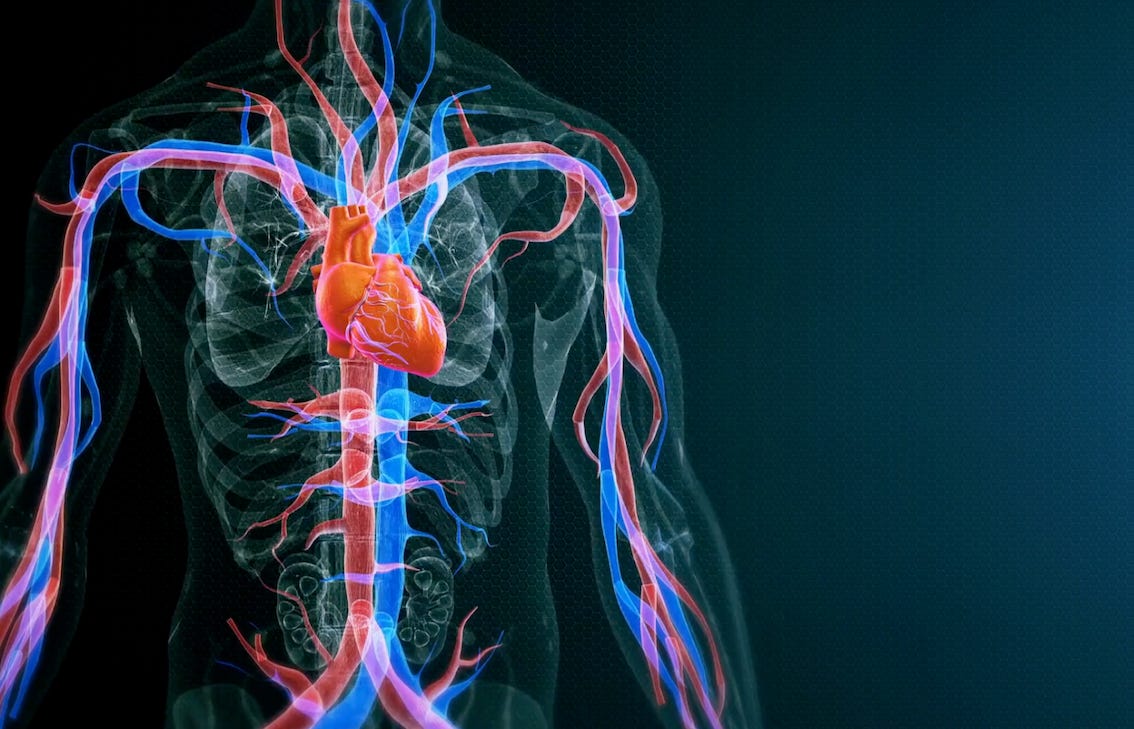
In 2023, researchers examining tissue from cardiac surgery patients found microplastics in the pericardium - the outer sac surrounding the heart - as well as in the heart muscle itself, the surrounding fat, and the left atrial appendage. In other words: every layer of the heart.
Perhaps most troubling, researchers found new plastic particles in some patients after surgery, that had not been present before - suggesting that hospital operating theatres themselves are a source of microplastic contamination.
The Arteries
In March 2024, one of the most consequential microplastics studies ever published appeared in the New England Journal of Medicine. Italian researchers examined plaque removed from the carotid arteries of 257 patients and found microplastics in 58% of the samples.
They then followed those patients for nearly three years. Patients with microplastics in their artery plaque were four and a half times more likely to suffer a heart attack, stroke, or death.
The researchers were careful to note that this does not prove the plastic caused these outcomes - it may be that inflammation draws particles to already-diseased arteries. But cardiologists are now actively debating whether microplastics should be considered a new cardiovascular risk factor, alongside smoking, blood pressure, and cholesterol.
The Liver, Kidneys, and Bone Marrow
These findings have been confirmed across multiple studies. The liver and kidneys, which filter the blood, accumulate plastic particles as a direct consequence of doing their job.
In 2024, microplastics were confirmed in bone marrow - buried inside the bones, where blood cells are produced. One researcher described it as evidence of “systemic penetration into core biological infrastructure.”
The Brain
This, and the examples following, should stop you in your tracks and leave you demanding that action be taken.
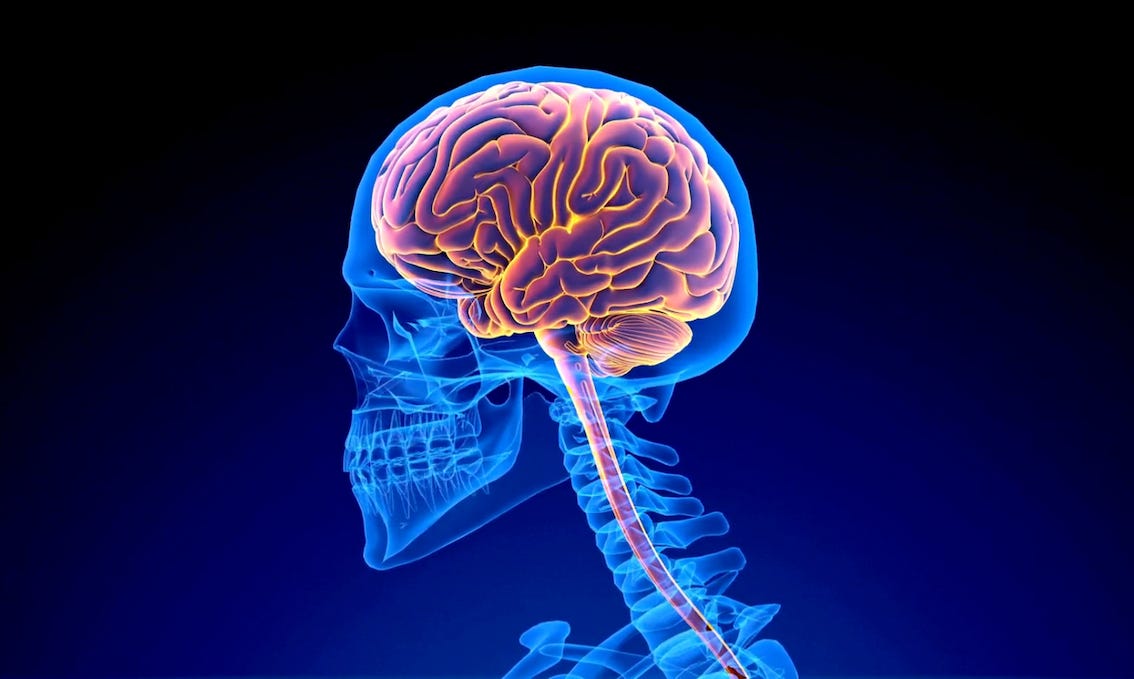
In February 2025, a study published in Nature Medicine compared brain tissue samples from people who died in 2016 with samples from those who died in 2024. Microplastics were found in all samples.
But that was not the most alarming part.
Microplastic concentration in human brain tissue had increased by approximately 50% in just eight years - rising to nearly 5,000 micrograms per gram of tissue.
The particles appeared as nanoscale, shard-like fragments: tiny, jagged pieces of plastic embedded in the frontal cortex.
The frontal cortex is the part of the brain most associated with what makes us distinctly human - decision-making, personality, impulse control, and the capacity to plan for the future.
The lead researcher, Matthew Campen at the University of New Mexico, put it plainly: ”This is an eyes-wide-open situation right now. We are just now realising how much plastic is in our bodies. We need a surge of research.”
The Reproductive System
In 2024, researchers at the University of New Mexico found microplastics in testicular tissue from every one of 23 human autopsy samples. Human testes contained nearly three times more plastic than those of dogs - despite dogs being far less discriminating about what they put in their mouths (Border Terrier father here, confirming that point).
Multiple studies have confirmed microplastics in human semen. Men with PET plastic in their semen showed significantly lower sperm normality in at least one study.
And in 2025, microplastics were confirmed in follicular fluid - the liquid surrounding eggs in women’s ovaries. The implications for fertility are not yet known.

Newborn Babies, The Placenta and Umbilical Cord
The placenta evolved to protect a developing foetus from harmful substances in the mother’s blood.
But microplastics are passing through it.
The first study to find this - the one that coined the term ‘plasticenta’ - was published in 2020. By 2024, microplastics had been confirmed in umbilical cord blood and in meconium - the first stool passed by a newborn baby in the hours after birth.
That really is frightening, and a huge WAKE UP alarm call: A baby’s gut contains plastic, even before they have drawn their first independent breath.
In 2022, microplastics were also found in breast milk from healthy women - being passed on during feeding.
Children’s Tonsils
In early 2025, a surgical team at Stanford was examining tonsils removed from children for routine conditions such as sleep apnoea. They began testing the tissue for microplastics.
They found them - not just on the surface, but embedded deep within the tissue. And in one child’s tonsils, they found something visible under a microscope: Teflon.
Yep, the non-stick coating used on cookware. It had shed as microscopic particles, been inhaled or ingested, and lodged inside a child’s lymphoid tissue.
So What Do We Actually Know?
We do not yet fully understand the precise health consequences of all of this. The science is young and the regulatory response is slower still.
What we know for certain is that microplastics are in our bodies, in every organ studied, and in increasing concentrations.
There is no medical or regulatory body anywhere in the world that currently states microplastics in the human body are safe.
The position of the WHO, the FDA, and equivalent bodies is that more research is needed.
It is deeply unsettling.

How Did We Get Here?
The first microplastic was detected in ocean water in the early 1970s. The term itself was coined in a scientific paper in 2004. For roughly the following decade, public concern was focused almost entirely on the ocean - on marine animals, on images of seabirds and sea turtles. We responded, largely, with paper straws and a modest reduction in plastic bag use.
The first study finding microplastics in a human organ - the placenta - appeared in 2020. Blood: 2022. Lungs: 2022. Heart: 2023. Testicles: 2024. The brain in detail: 2025.
Science has only recently turned its full attention to something that has been accumulating inside us for decades.
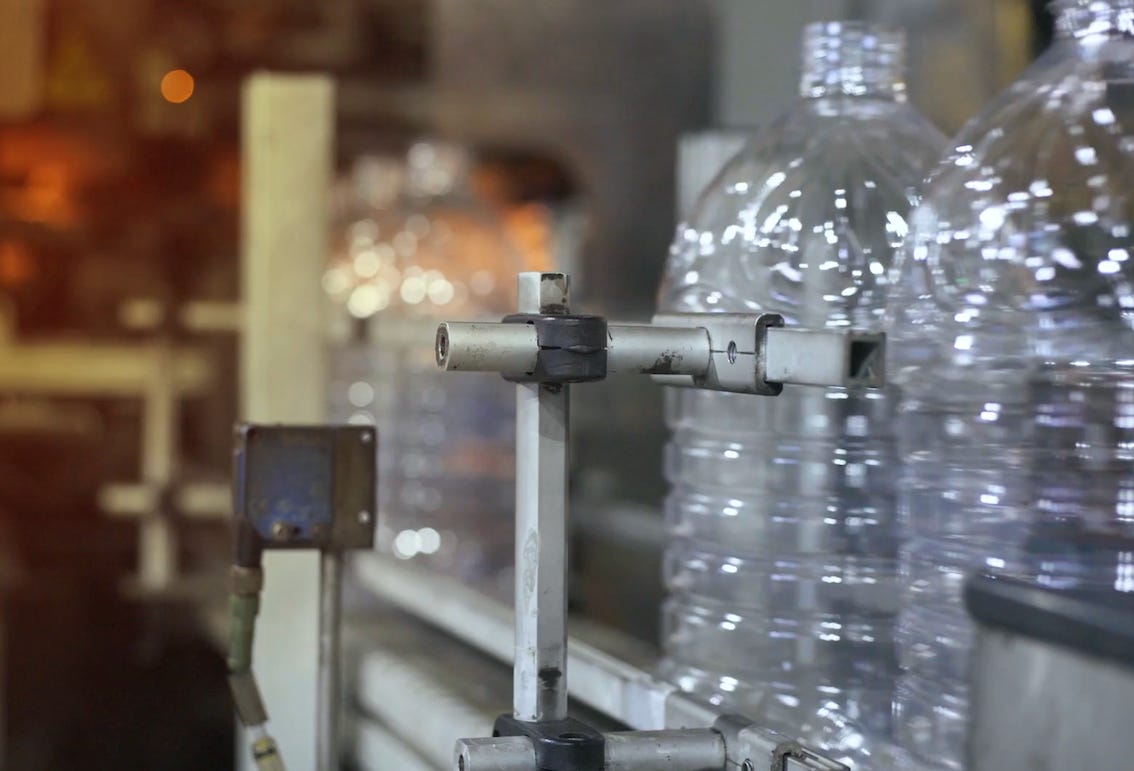
Global plastic production was roughly two million tonnes in 1950. It is now more than 450 million tonnes a year.
Even if we were to stop producing all plastic tomorrow, what already exists in the environment would continue breaking down into smaller and smaller fragments for centuries.
There is currently no known way to remove microplastics from the human body. The only strategy available is to slow the intake - to reduce the use of plastics, wherever possible, now.
Plastic has always been found when researchers chose to look. In blood. In tonsils. In the deepest point of the Mariana Trench, 11 kilometres below the ocean surface. On the summit of Mount Everest. In Antarctic penguins.
There is nowhere left to look.

Who Is Making This Worse — And Why
The health story above is disturbing enough on its own terms. But it exists within a larger story - one about power, profit, and a deliberate strategy to keep the plastic flowing.
Because while doctors are finding microplastics in children’s tonsils and brain tissue, the industry that makes plastic is planning to produce far more of it.
Plastic Is Oil’s Plan B
To understand why plastic production is accelerating rather than slowing, you need to understand one thing about the fossil fuel industry - it has seen the energy transition coming and is repositioning.
As demand for oil-based fuels faces long-term pressure from electric vehicles and renewable energy, major oil and gas companies have identified plastics as their growth engine for the coming decades.
Nearly 99% of plastics are made from fossil fuels. Producing more plastic means finding a new market for oil and gas, even as the world tries to burn less of it.
The scale of what is planned is staggering. Companies including ExxonMobil, Shell, and Saudi Aramco are all in active expansion mode. Shell’s petrochemical complex in Pennsylvania became operational in November 2022, adding more than 1.6 million tonnes of polyethylene capacity per year - more than doubling the company’s global output.
Saudi Aramco has stated plans to channel roughly one-third of its oil production into plastics and petrochemicals by 2030. Petrochemicals already make up 82% of Saudi Arabia’s foreign exports critical to its government budget.
China is in a category of its own. The International Energy Agency describes its plastics expansion as dwarfing any historical precedent. In the five years between 2019 and 2024, China added as much plastic production capacity as Europe, Japan, and South Korea combined.
The global petrochemical industry, valued at $638 billion in 2023, is projected to reach $838 billion by 2030.
The Treaty That Failed
In March 2022, representatives from 175 nations gathered at the UN Environment Assembly and agreed to negotiate a legally-binding global plastics treaty - one that would address the full lifecycle of plastics, from extraction to disposal. The deadline for completing it was the end of 2024.
It failed.
Not because the science was absent. Not because most governments lacked the will. It failed because of what happened in the rooms where the negotiations took place.
At the fifth round of treaty negotiations in Busan, South Korea, in November 2024 - the session that was meant to be the final one - 220 fossil fuel and petrochemical industry lobbyists were registered to attend. That made them the single largest delegation at the talks.
They outnumbered the combined delegation of the European Union and all its member states. They outnumbered representatives from the Scientists’ Coalition for an Effective Plastics Treaty by three to one. They outnumbered delegates from the Indigenous Peoples’ Caucus by nearly nine to one.
The negotiations went on and no agreement was reached.
A follow-up session was held in Geneva in August 2025. At that meeting, the lobbyist count had risen to 234. The talks collapsed again.
The central fault line throughout both sets of negotiations was the same: the majority of countries wanted the treaty to address plastic production. The petrochemical bloc, led by oil-producing states including Saudi Arabia, Russia, and Iran, insisted the treaty should focus only on waste management and recycling.

The Recycling Myth
The industry’s preferred alternative to production limits is recycling. But global plastic recycling rates have remained below 10% for decades - despite billions of dollars spent on infrastructure and decades of public awareness campaigns asking people to sort their bins correctly.
The problem is primarily structural - most plastic is technically very difficult or economically impossible to recycle at scale. There are thousands of different plastic formulations, many of which cannot be processed together.
Contamination is a constant issue. And recycled plastic is often more expensive to produce than virgin plastic made from cheap fossil fuel feedstocks.
What Would Actually Help
The scientific consensus, as laid out in open letters from the Scientists’ Coalition for an Effective Plastics Treaty, is that recycling alone cannot solve this. The root cause is overproduction. Any meaningful solution has to address what is made, not only what is thrown away.
The mechanisms that would actually work include legally binding caps on plastic production - the Extended Producer Responsibility (EPR) - rules that make the companies who make plastic financially liable for its full lifecycle, including disposal.
The EU has made meaningful moves in this direction, including bans on specific single-use items and requirements that plastic bottles contain a minimum proportion of recycled content.
But the EU cannot solve this alone. Plastic production and pollution is global. The microplastics in your frontal cortex arrived from a global supply chain.
Meanwhile, youmay well remember February 2025, when President Trump posted “BACK TO PLASTIC” on social media, in reference to his intention to reverse a government plan to phase out plastic straws. That’s what we are up against.