

The Simple Media Trick That Kills Interest In Climate Change

On media websites, the menu bar should not be seen merely as a tool to navigate. It’s a signpost to what is truly important in this world. Or at least, it should be.
The techy people put the website together, but journalists choose the categories. Journalists tell us: ‘These are the broad subjects we are covering, that you should be interested in’.
If the climate crisis is not there, front and centre, then journalists are telling you it’s not a major topic. If you have to scroll through sub-headings and sub-sections, through ‘science’ or ‘other’ to find the climate news, then it’s not being given the prominence the facts demand.
If the subject is seemingly impossible to find, then it’s a safe bet that the fossil fuel industry is part-funding the title.
Here we’ll look at many of the major news outlets of the UK, US and Australia, as examples.
It tells a front page story in itself.
We cannot, of course, expect all media outlets to report honestly on the climate crisis. As journalists, they absolutely should do this, but as puppets for billionaire, fossil-fuel serving media owners, many will never adhere to the principles of their journalistic training.
Which is why you should also refer to my article about being the media yourself.
Independent environmental journalism relies on the generous support of readers to continue. If you are in a position to help fund my work, thank you very much…


The Honest Journalists
Let’s call a spade a spade. Human-accelerated climate change is a fact. It is now a crisis; a global emergency.
Journalists are trained to follow a code of conduct that demands they report the truth. So if they aren’t platforming the climate crisis as a major topic, they aren’t being truly honest with us. That’s my opinion, of course, but how else are we supposed to view the matter?
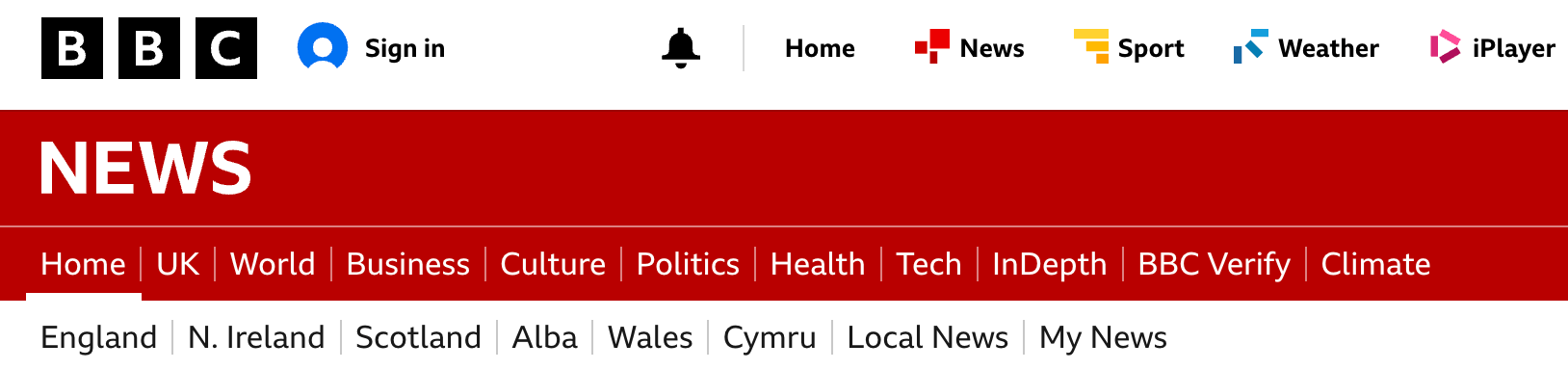
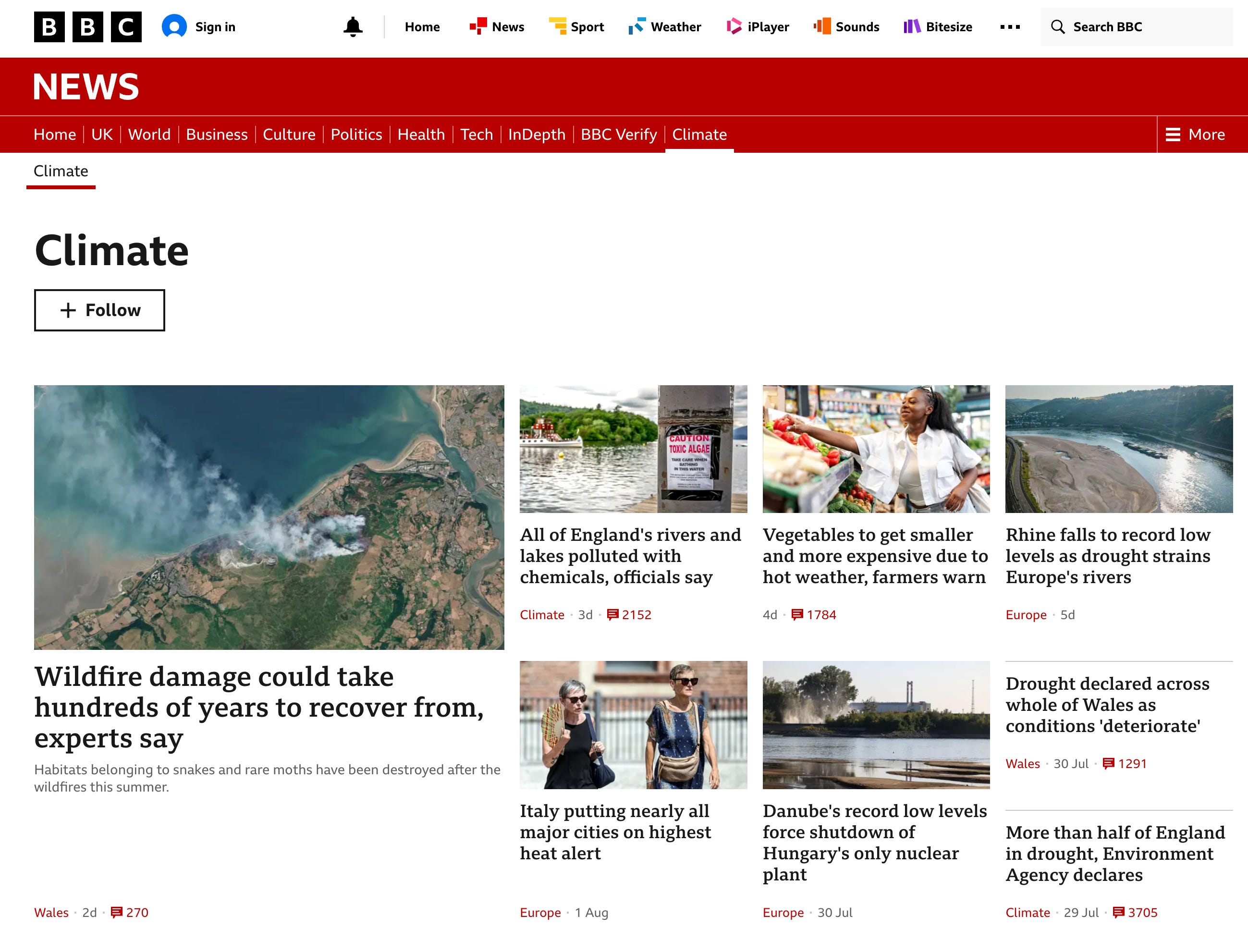
The BBC has a global reputation for fair, balanced reporting. The corporation annoys both sides of the political spectrum, which is how you know for certain that, most of the time, it is achieving close to independence of view.
The BBC was one of the first major media outlets to give Climate a place in its main menu bar, where it remains today - even if it does look like it’s been tagged on the end as an afterthought.
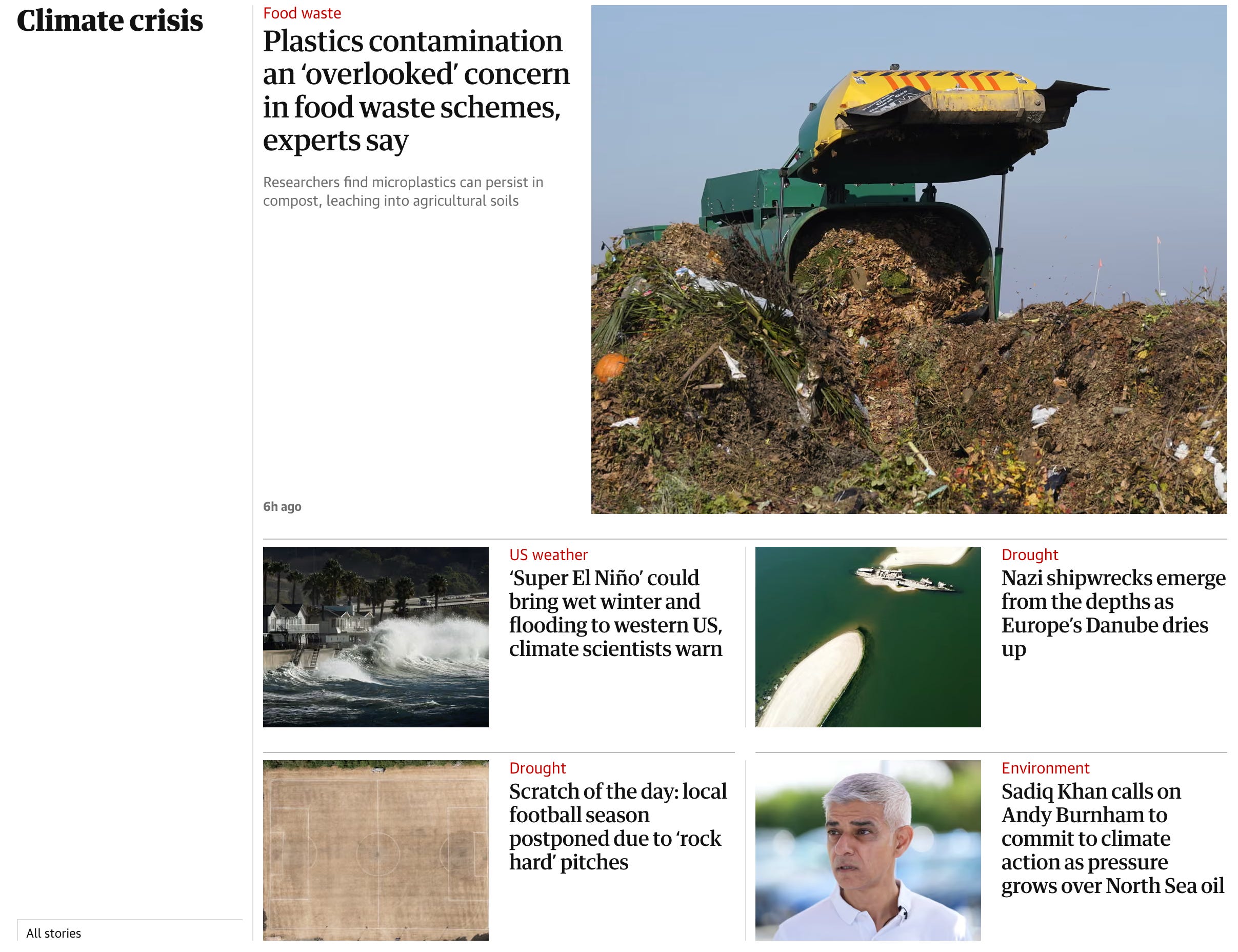
The Guardian publishes editions for countries across the world, and goes one better than the BBC. It’s the most honest, most heavily resourced climate and nature desk of all the major titles here.
And it spells the issue out clearly in the menu bar: Climate crisis.
This earns a berth near the top of the list, given its vital importance. Environment also has its own section, because the climate crisis is a major news issue all by itself. Every journalist from every other publication, please take note.
This is the way to do it. This is honest journalism, because it is based on facts.

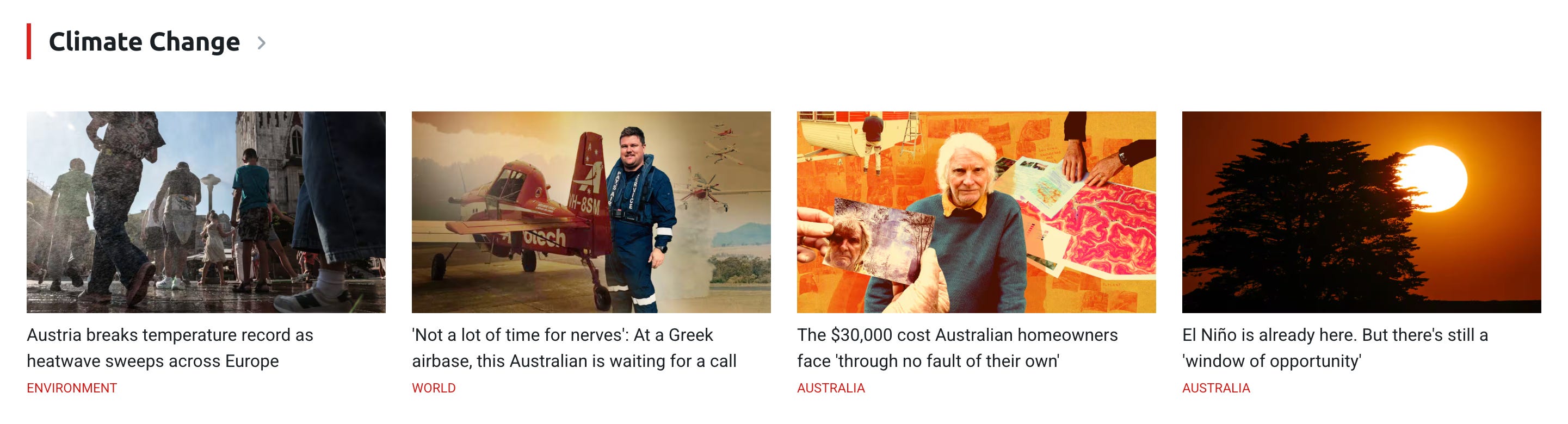
The Financial Times and The Wall Street Journal are traditionally conservative titles, given their money-led subject matter. Opinion columns tend to follow this line.
News journalists on the titles, however, have been forced to recognise that the climate crisis is also a financial crisis; an economic crisis. The major companies they are reporting on have climate resilience built in, so this cannot be ignored by the writers.
I’ve included WSJ here, even though climate is not mentioned in the main menu bar, as it is listed as the leading topic under ‘U.S.’

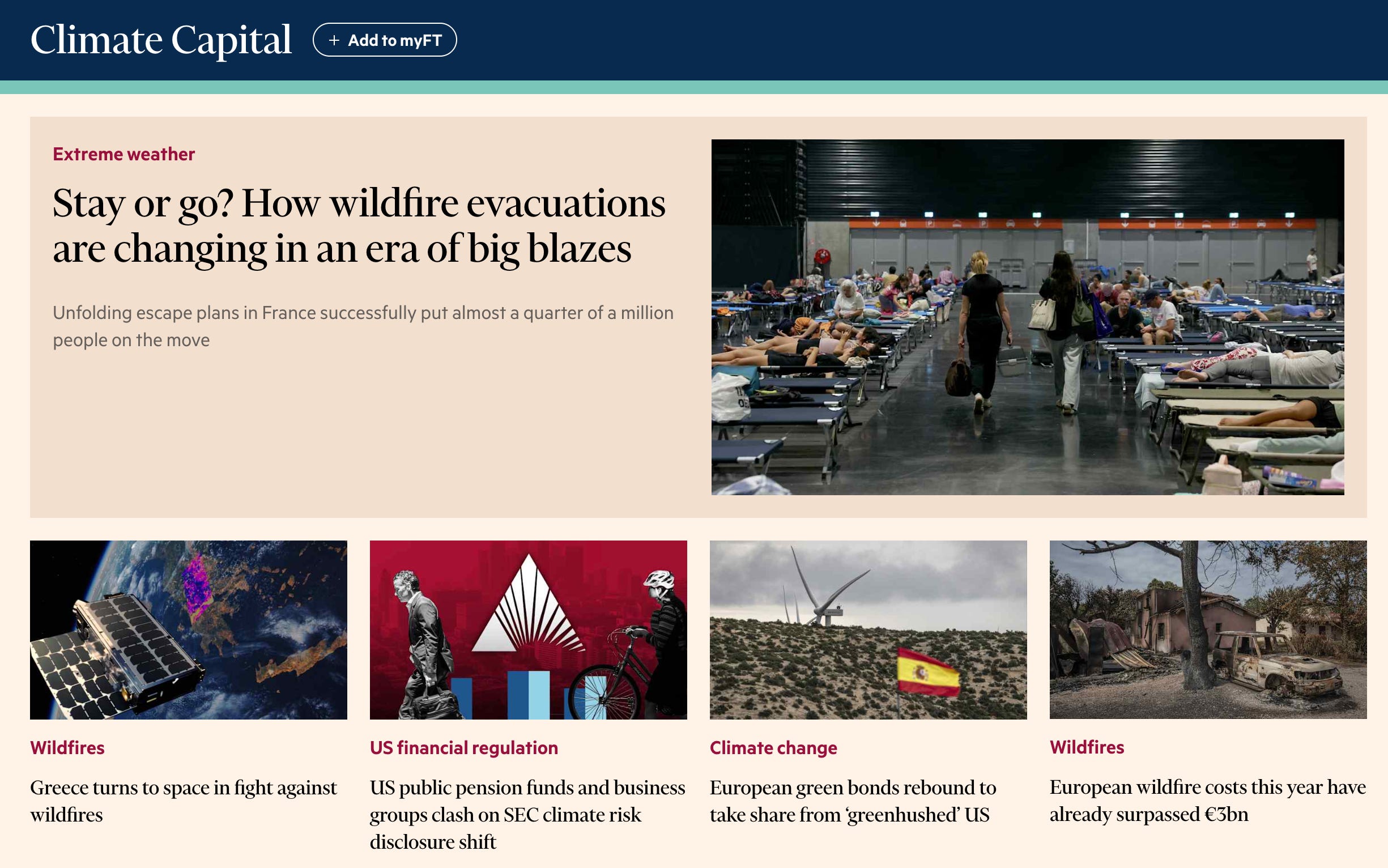

Despite heavy cuts to the climate desk under title owner, Amazon billionaire Jeff Bezos, The Washington Post is still dedicated to some honest climate and nature reporting.

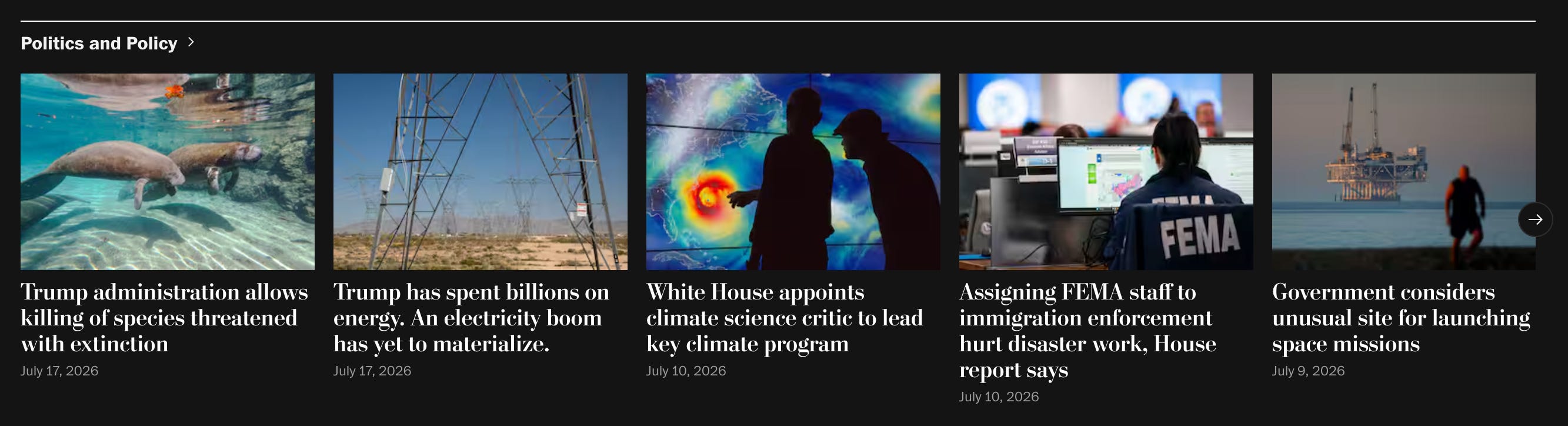
The Los Angeles Times has one of the strongest remaining US desks, as can be seen from its sub-sections in the drop-down menu.
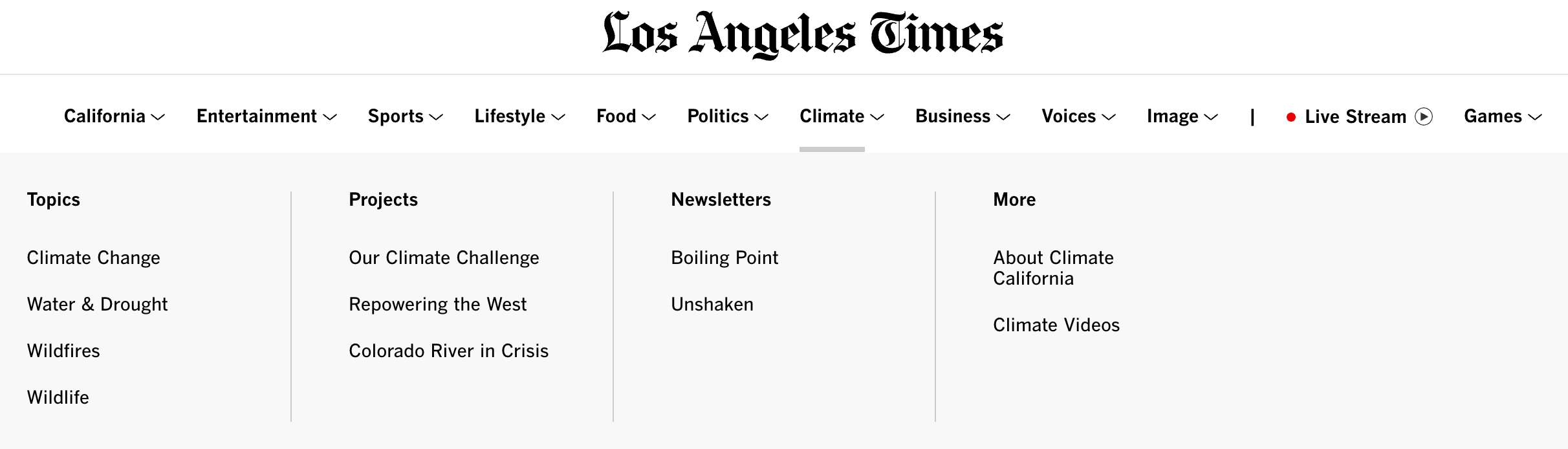
In Australia, much of the media has lived in denial about the climate crisis, but SBS News carries honest, factual reporting on this subject, with Climate Change being a section under top-level Environment.

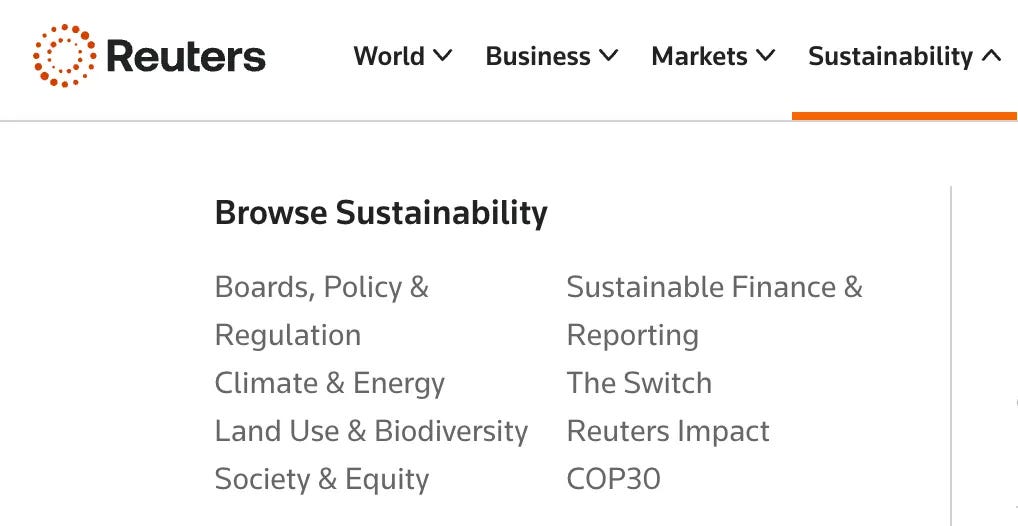
Reuters is the world’s largest news agency, and though it is perhaps strange that it chooses ‘Sustainability’ as the top signpost, the website nevertheless filters into more sub-sections than most.
Again, very encouraging.
‘Should Do Better’
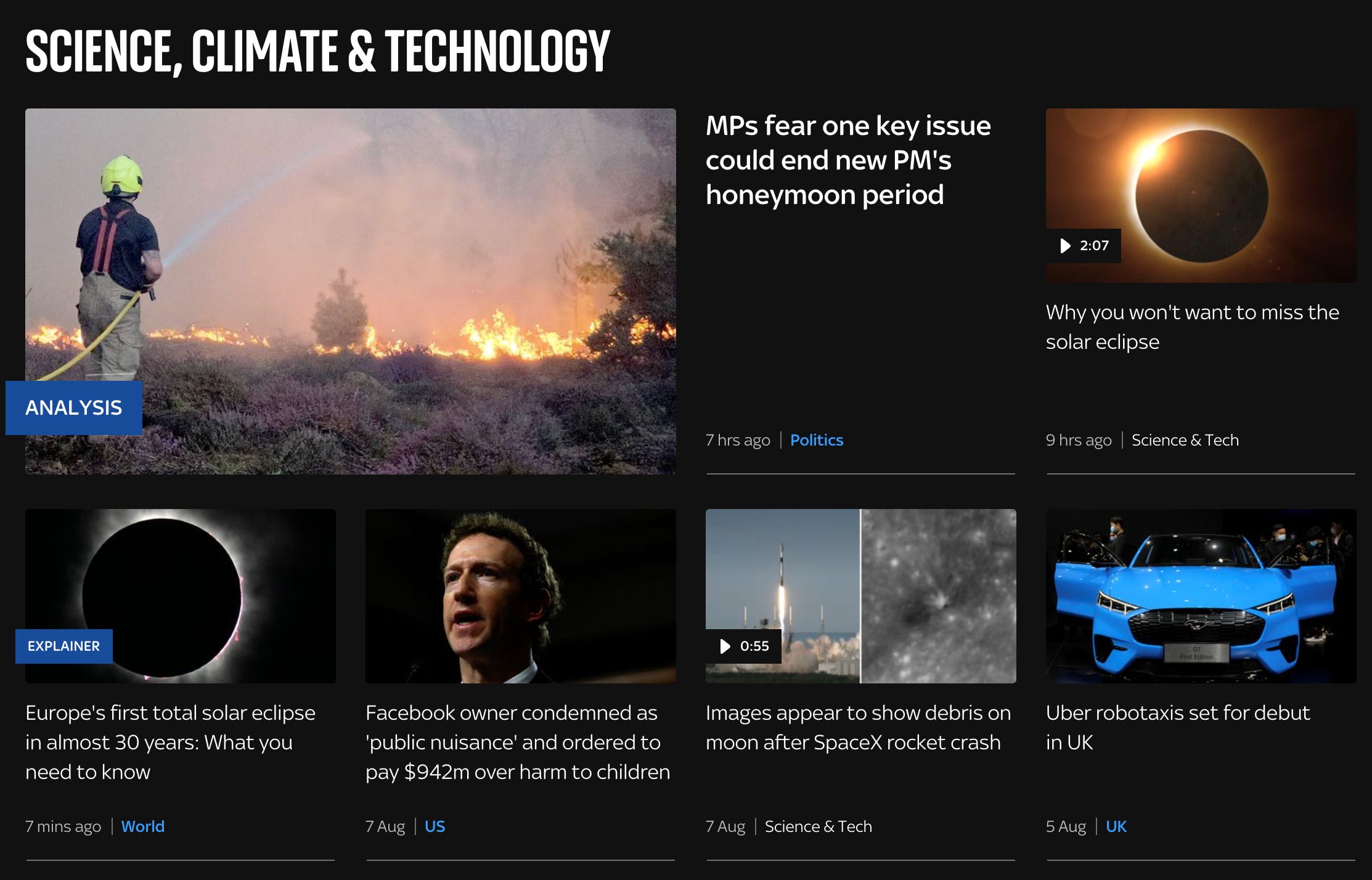
Sky News in the UK can, when it wants to, present genuinely informative and supporting news and features on the climate and nature crises.
Even so, management cancelled The Climate Show in 2024, and now bizarrely lumps climate in with science and technology as an overarching topic.
Perhaps Sky is the only major media player to be linking AI and climate change. Nevertheless, climate should earn its own place in the headlines.

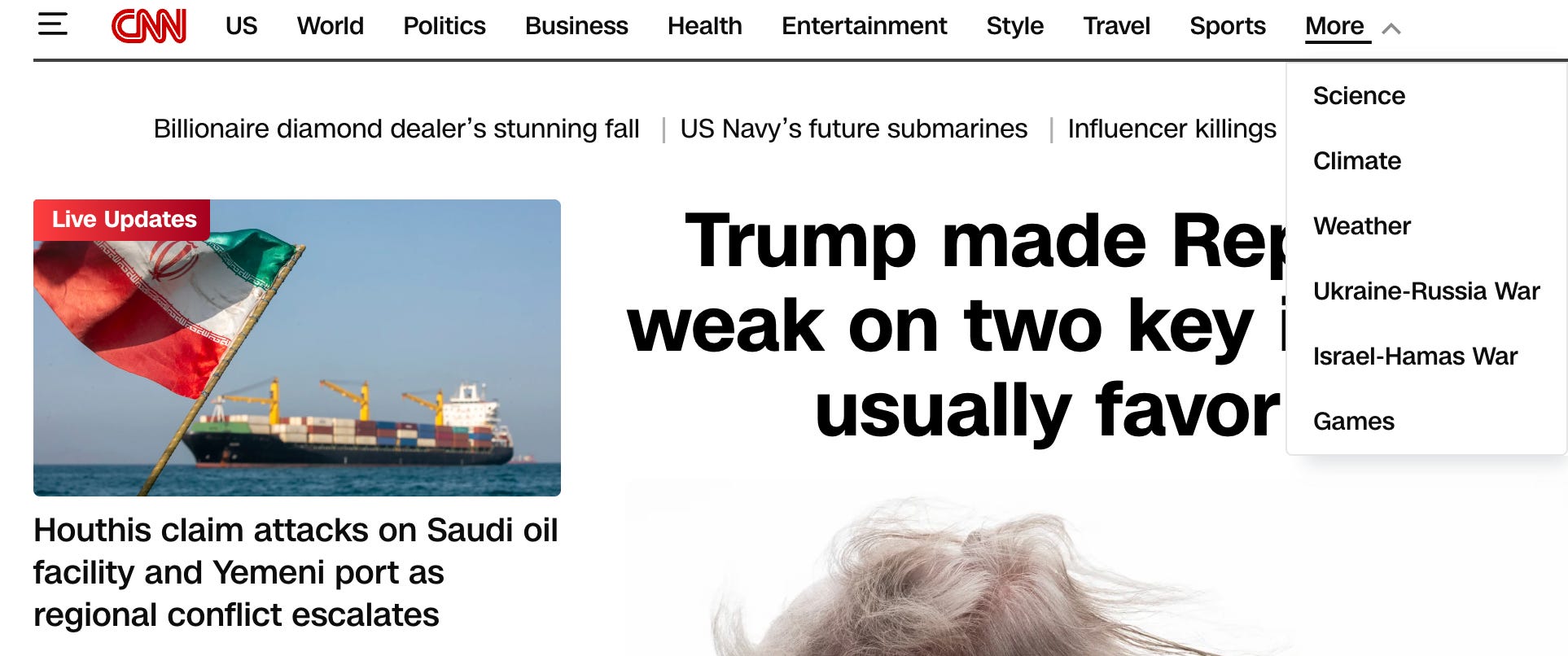
CNN stands out as a major American network prepared to tell the truth about the climate crisis, yet prefers not to shout about it
You’ll find the most important stories in the world at the end of the menu bar, under ‘More’.
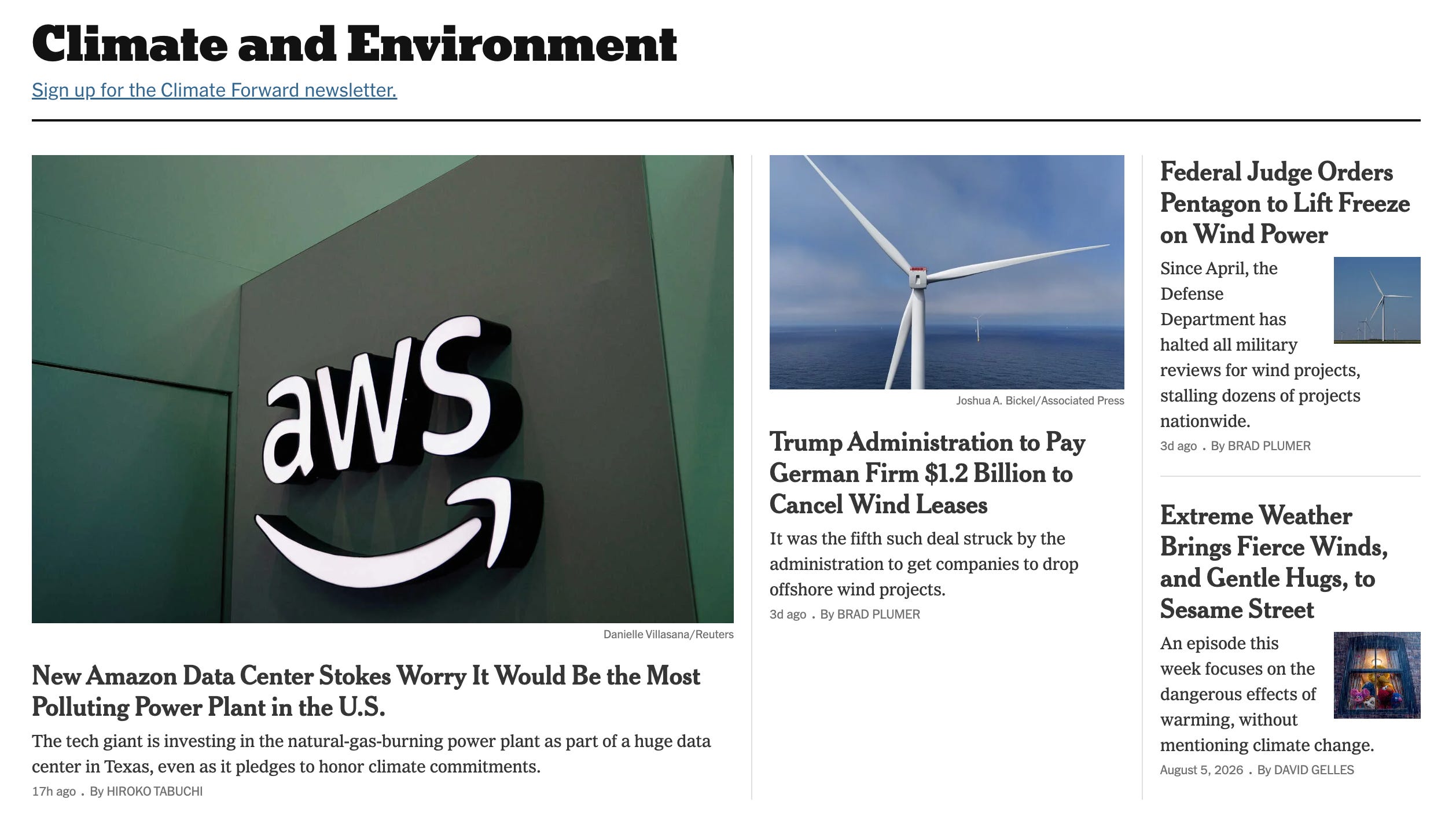
The New York Times also hides its climate coverage, but does at least have a dedicated section, if you can find it.

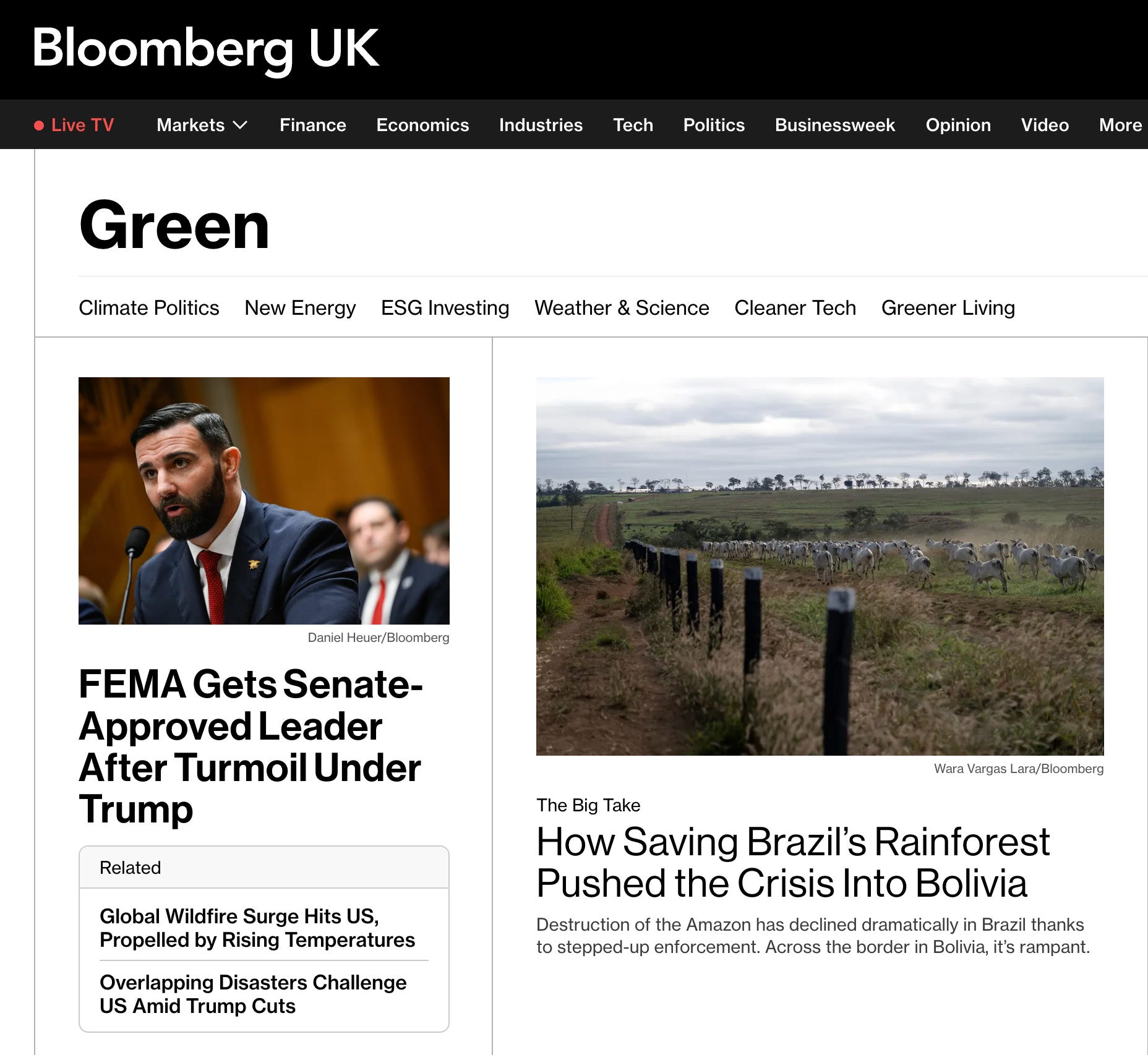
Same again for Bloomberg. An impressive sub-menu but you’ve first got to navigate through ‘More’ and the vague ‘Green’ label.

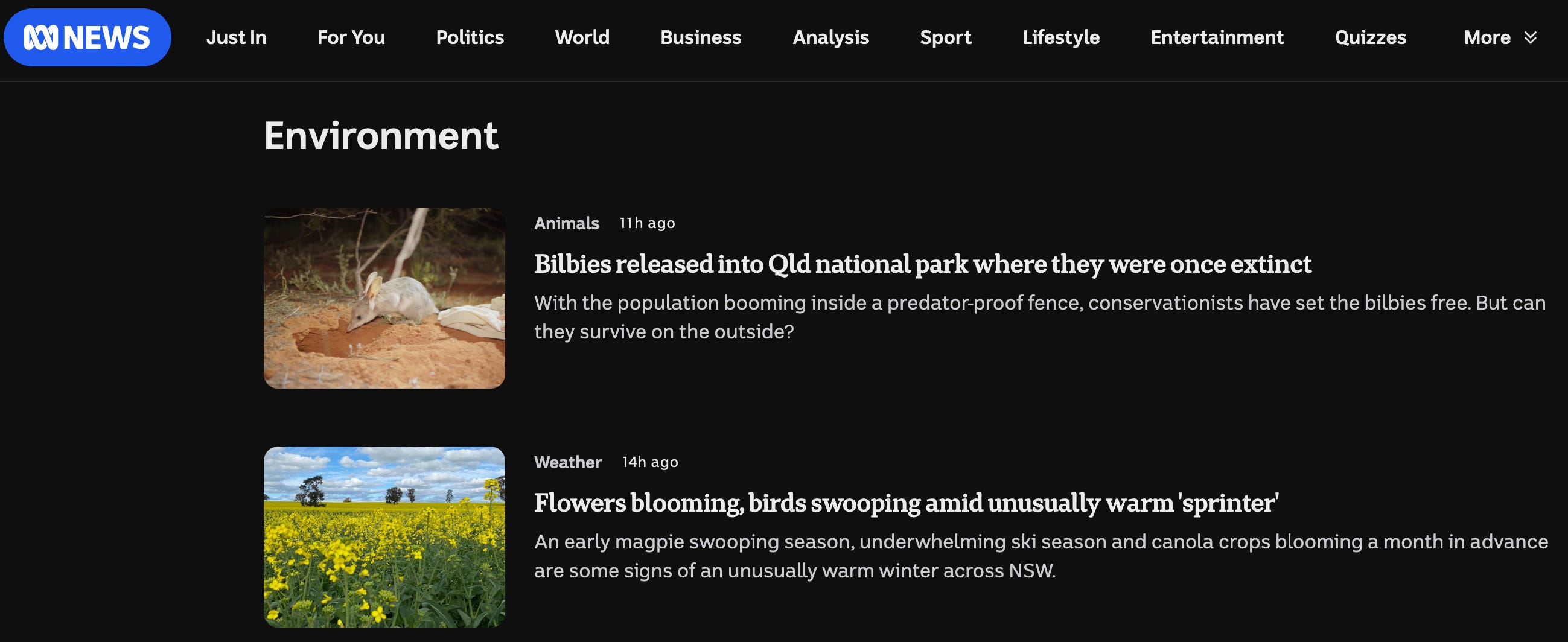
ABC News in Australia provides a hidden Environment section, though there’s little alarm reported.
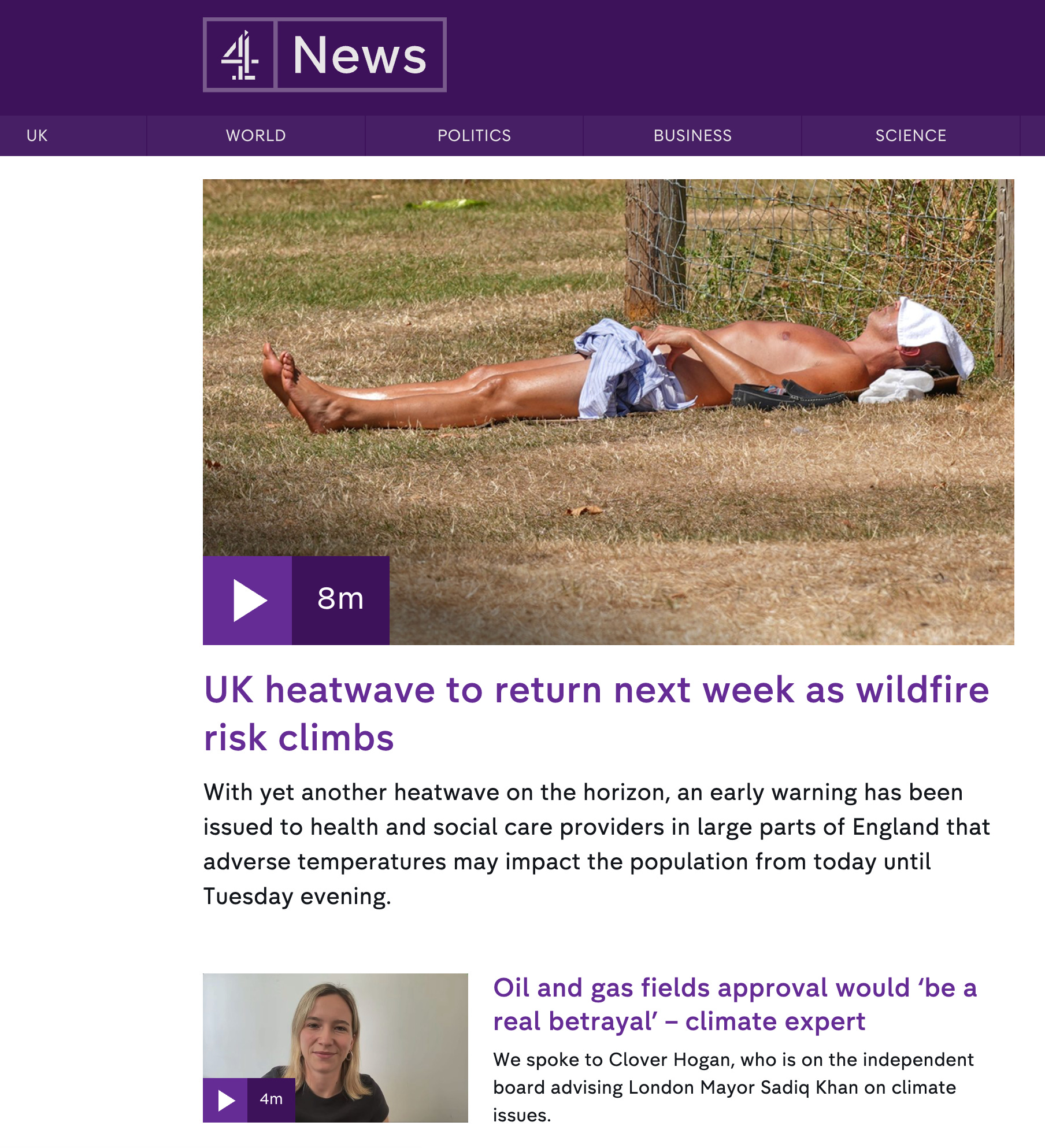
The UK has come to expect more when it comes to climate reporting from The Independent and Channel 4 News. Their homepages were encouraging when I checked them; the menu bars, less so.

For a left-leaning publication (The Mirror) and the BBC’s main broadcasting rival in the UK (ITV), I would expect far more from their own vague menu bars.


Dishonest Journalism?
So to the media outlets who won’t signpost any kind of climate crisis. I’m calling them out as ‘dishonest’ in a journalistic sense. It’s my opinion that honesty in journalism equates to factual reporting.
In this case, factual reporting would be to honestly tell the world the most important story, about the devastating climate and nature crises. That’s what journalists are here for, to tell the truth.
By not telling this story, or by underplaying it, we have to suspect that underhand tactics, such as fossil fuel funding, are setting the news agenda.
Either that, or blinkered devotion to the right of politics, which we know for certain is heavily funded by polluting billionaires.
Any other excuse for misreporting doesn’t wash well. For it start, it calls the quality of the journalism into serious question.
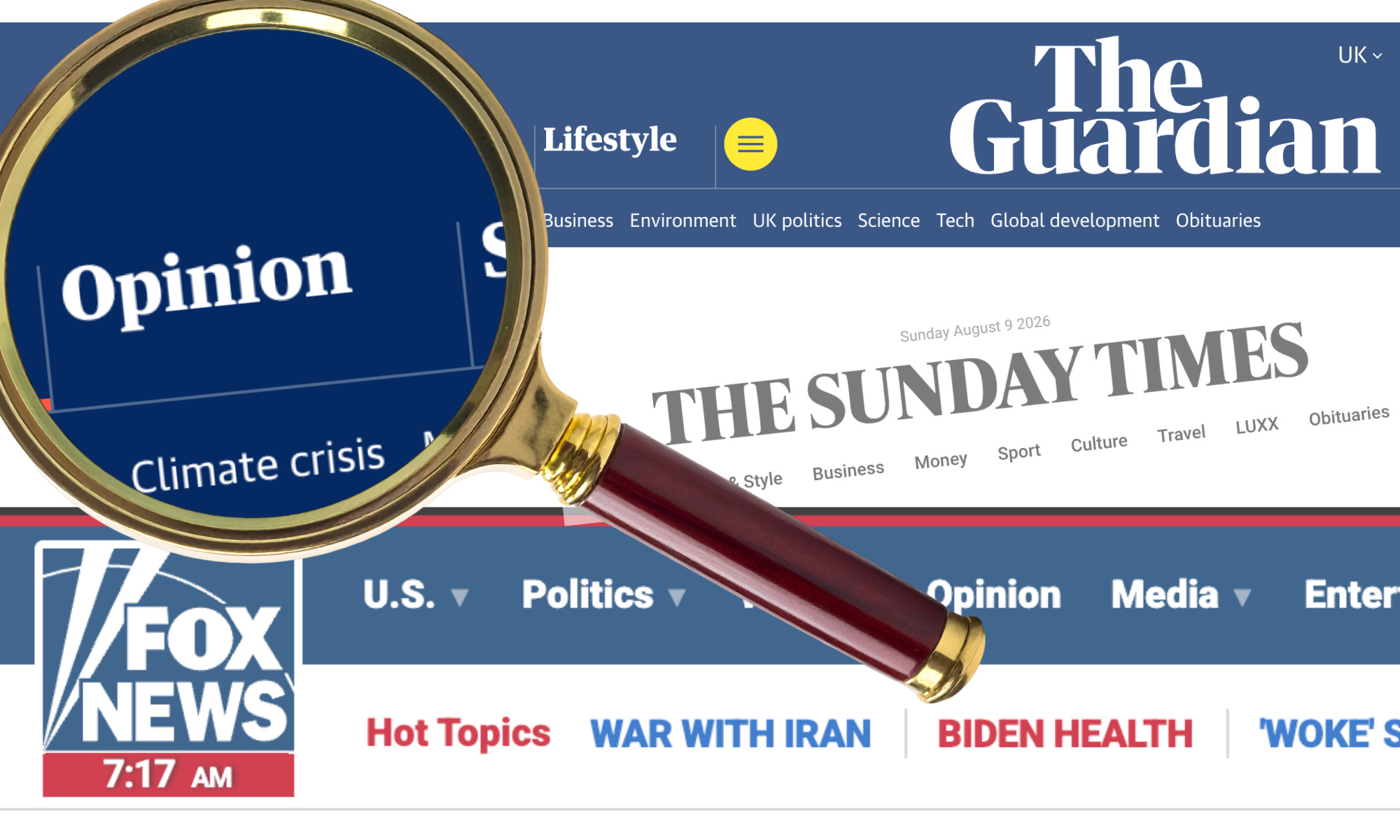
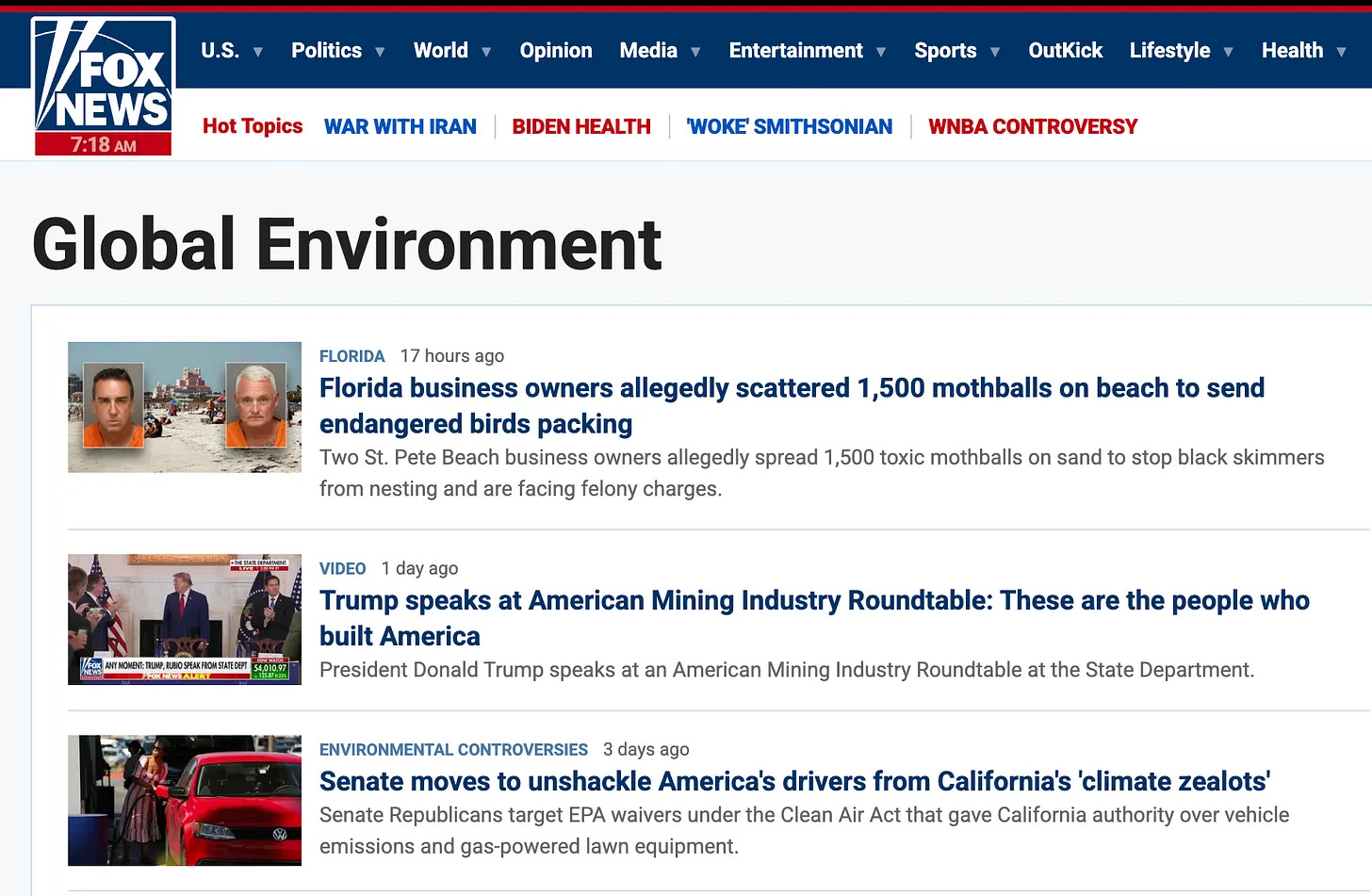
And so to Fox News. You might not expect any environmental coverage from Trump’s media mouthpiece, but it actually has a section, should you wish to dig for it, called Global Environment.
Of course, there are no real environmental stories there. Just look at the example from when I took a scan - the words “climate zealots” embarrassingly emblazoned.
Fox News is not only misrepresenting the truth on the climate crisis - it is misrepresenting journalism.
Exactly the same can be said for GB News in the UK. The hedge fund run by Sir Paul Marshall, the co-owner of GB News, almost tripled its investments in fossil fuel companies in the first quarter of 2026 to $2.8bn, the Guardian revealed.
The GB News homepage is below. I wasn’t going to pay, or accept cookies from 890 partners, but you can see from their other stories where their priorities lie.

Another right-wing title pretending to have an environment section is The Telegraph. If you look a bit closer, it’s just an excuse to twist the knife into Zack Polanski, leader of the Green Party in England and Wales. Fortunately, this kind of thing simply fuels Zack even more.


Here’s a strange one. CBS News leans left, but there’s no obvious route to climate stories - and UFO Files are up there ahead of it on the menu bar!

In Australia, the channel formerly known as Sky is also ignoring the climate emergency, but you’d expect it of News 24.
Their top links include ‘Immigration Crisis’, without an educational nod to the fact that the country will be receiving millions more immigrants soon, due to droughts, heat, wildfires and famine caused by the climate crisis.

And now for a selection of more well-known titles which show no easy route to climate stories - some, you’d expect no more, no less…











Beneath the menu bar
Outright denial of climate change has largely disappeared from mainstream outlets. You can’t fool readers who are using the newspaper as a fan to cool themselves down in yet another heatwave.
Now, it is climate policy that’s in the firing line - specifically net zero initiatives, with the fossil fuel-funded media successfully poisoning the phrase ‘net zero’ to the point of such toxicity that it should probably never be used any more by climate communicators.
Analysis by the professionally honest nonprofit Carbon Brief found that 2025 was the fourth record-breaking year in a row for media opposition to net zero policies.
The counter-argument to the points I have made, which the titles I have criticised make themselves, is that scrutinising the cost and delivery of net zero policy is legitimate journalism, not denial.
That’s true, of course. But presenting cost figures without the counterfactual cost of climate inaction, and without presenting the true facts about economic climate damage, leaves readers with a distorted, dishonest picture of the truth.
As a journalist myself, it still astounds me that the natural built-in nose for news, and terrier-like digging for the biggest stories on the planet, completely eludes many journalists at the ‘top level.’
The climate crisis is the biggest story they will ever cover, if they choose to do so.
Journalists have abandoned the heart and soul of their craft, if they are not reporting the truth.
That’s an internal as well as external breakdown of values. That’s why the world needs us all to share important, factual information, and no longer leave it to the media.