

Why The Guinea Pig Meat Scandal Hides a Greater Ethical Dilemma

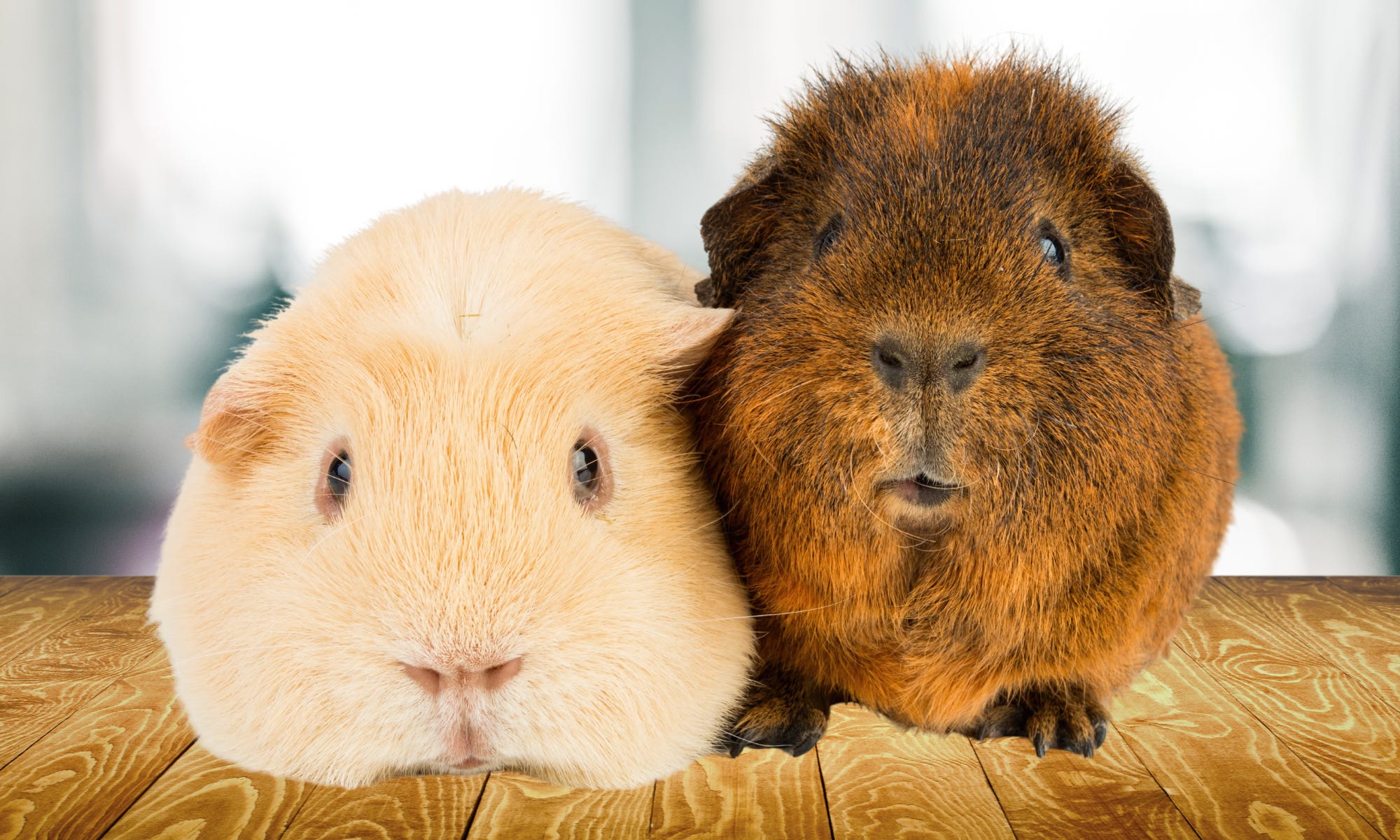
Animal lovers are furious after a couple in Pembrokeshire, Wales were given permission to breed guinea pigs for food.
Little, ickle squeaky friendly guinea pigs.
Or, if you live in large parts of South America and Africa - meal time.
This story will read differently depending on where in the world you are reading it. And that’s the whole point.
The off-grid Welsh couple secured planning permission under the government’s One Planet Development policy, which encourages sustainable living.
The story has thrown up a couple of angles which the media just hasn’t covered:
Where do ethics, and the killing of animals, sit within ‘sustainable living?’
Why is one species valued more than another?
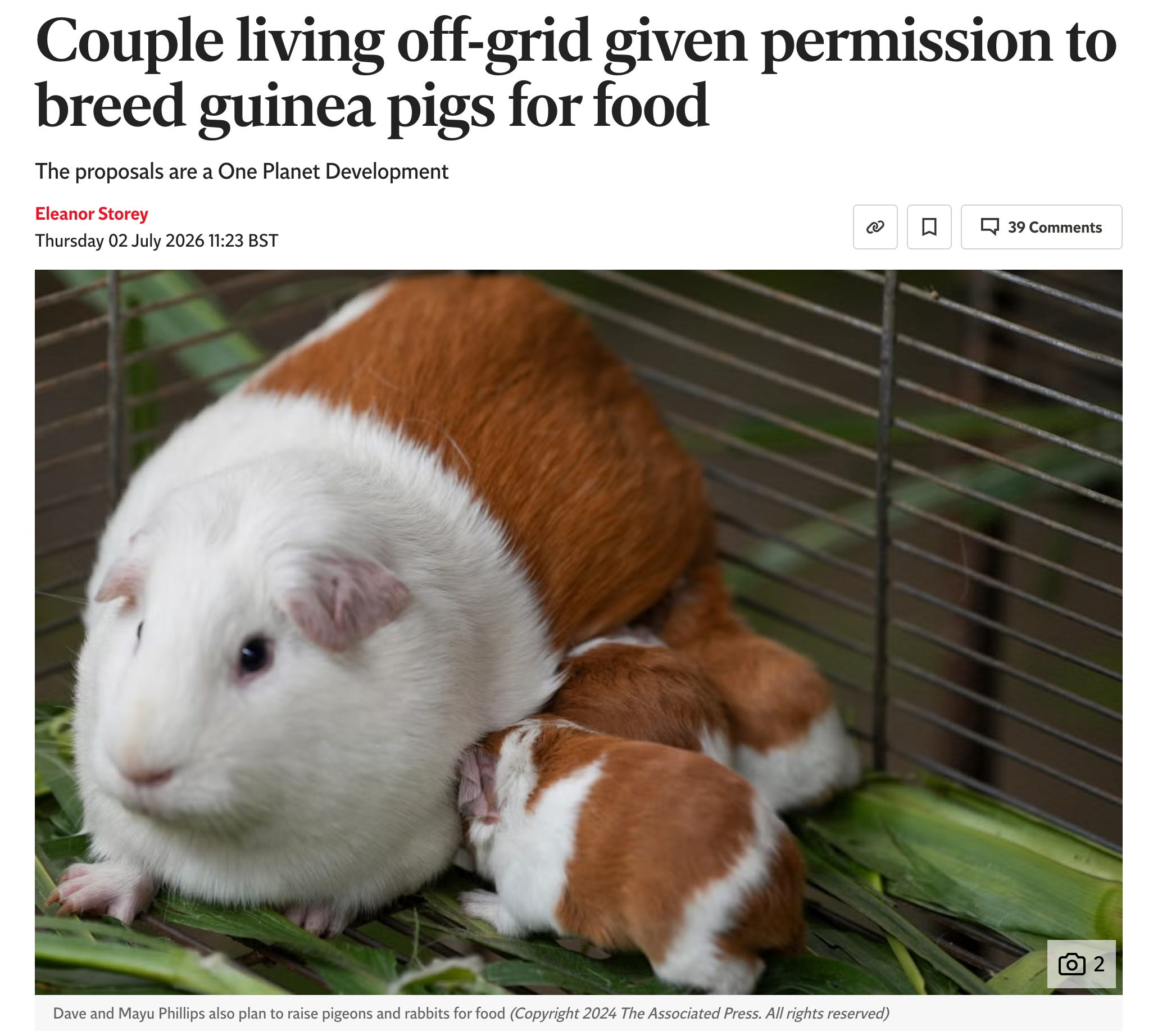
Dave and Mayu Phillips also received planning permission to raise pigeons and rabbits for food, apparently in an effort to live sustainably on the land. There will also be increased production of honey and walnuts on the site.
Interestingly, there has been no public or media outrage about the killing of rabbits and pigeons. Nor the farming of honey bees.
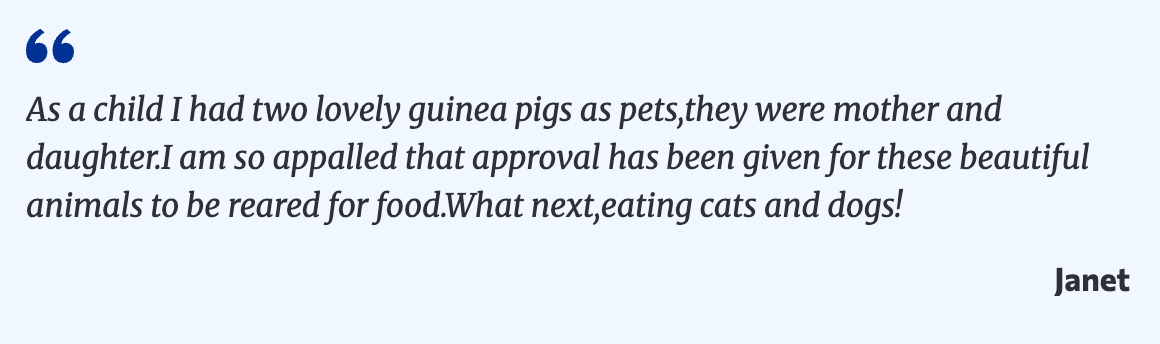
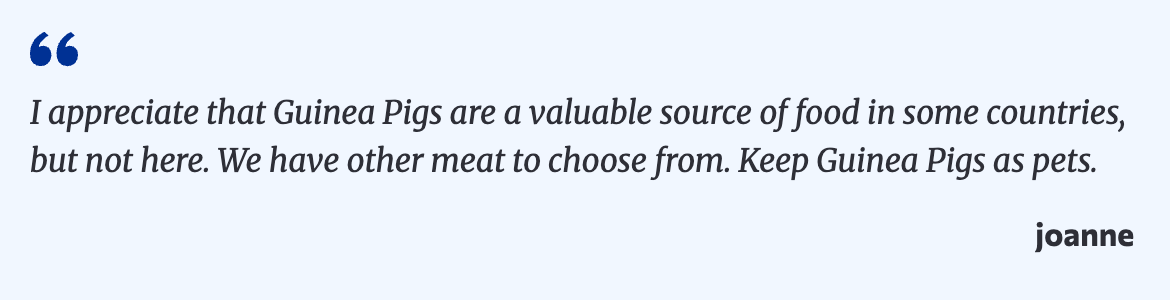
But the outcry over the fate of the cute little guinea pigs has been deafening. It includes a petition signed by thousands of people, with many comments chasing the line of “WHAT NEXT?! ARE WE GOING TO EAT DOGS AND CATS??!!”
Well, why not? It’s just the same as eating guinea pigs. Or regular pigs. Or cows. Or chickens….



Backyard executions do not match an eco-conscious way of life
What was your immediate reaction to the story? If you live in the Western world, it was likely a mix of disgust and moral superiority. You maybe pictured a beloved childhood pet, with a name and a personality.
Let’s stop pretending that disgust comes from a place of deep ethical alignment. It doesn’t. It comes from a place of cultural conditioning. It is yet another example of speciesism.
The One Planet movement demands that humans live within the biological means of Earth. Under that rigid framework of carbon footprints and resource efficiency, large livestock is an environmental disaster, but small-scale livestock like guinea pigs, rabbits, and pigeons make perfect sense.
They require minimal land, breed rapidly, and convert to protein with minimal emissions.
But this is where the sustainable living movement runs into trouble.
The spirit of environmentalism is supposed to be about dismantling human dominance. We are urged to stop treating the Earth as a resource, to be extracted, mastered, and consumed. We are told to see ourselves as part of an interconnected ecosystem.
And yet, if you look at a tiny, off-grid backyard hutch and see it primarily as an efficient unit of protein, you are practising the exact same philosophy of dominance. You have just downsized the scale of the violence.
We do not need to replace massive slaughterhouses with thousands of backyard executions. The ethical failure isn’t the size of the farm, or the types of animals killed - it’s the premise that these animals are ours to use as tools.
If the One Planet mission is really about moving toward a less destructive way of inhabiting this earth, then eating meat is a total contradiction.

Speciesism: Why a guinea pig is the same as a farm pig, or a chicken, or my Border Terrier…
The public outrage over this story centres on something else entirely - speciesism.
In the Western world, we treat animals like dogs, cats and guinea pigs as companions worthy of names and love, while reducing equally intelligent and sentient animals like pigs, cows, and chickens to commodities meant for consumption.
In the Andean region of South America, guinea pigs - known as cuy - have been raised as a staple protein source for thousands of years.
Meanwhile, in India, the cow is a sacred symbol of life, protected by law from the fate it routinely meets to supply your local burger joint.
Parts of Southeast Asia have historically traded in dog and cat meat - although the practice is now facing shutdowns, including an historic ban in South Korea.
People are completely blind to the fact that their outrage is geographic. They don’t actually object to the slaughter of sentient beings; they object to the slaughter of the wrong types of sentient beings.
Speciesism ignores an animal's actual capacity to feel pain or desire life.
There is absolutely no biological, neurological, or ethical distinction between the suffering of my Border Terrier, or a guinea pig, or a farm pig.
In fact, a pig possesses the cognitive complexity, problem-solving skills and social capacity of a three-year-old human child - easily outsmarting many of the dogs and cats we tuck into bed at night. Including mine!
I’ll never understand how you can look at a guinea pig in a frying pan and call it cruelty, then look at a pig in a slaughterhouse gas chamber and call it lunch.
That cognitive dissonance underlies so much of the nature and climate battles we contest every day.